
Joint letter – ICC reform and expansion risks diverting ETS Revenues from real climate action
In light of the European Commission’s ongoing considerations to amend the ETS State Aid Guidelines, revising the rules for Indirec...
News

Publish date: November 18, 2010
News
To introduce the Smart Cities EEI, Christopher Schoser, of the European Commission’s energy department, introduced the Smart Cities EII by exposing its objectives to accelerate the deployment of low carbon technologies in urban areas, e.g. ”put cities at the forefront of EU energy and climate policy by increasing the energy efficiency and the renewable energy system, and improving the sustainability of urban transport.”
The initiative will consist in the selection of pioneering cities as models and at the same time make partnerships more innovative.
The Smart Cities Initiative targets are (relatively to the 2010 level):
– reduce CO2 emissions by more than 20%
– increase renewable energy use in the supply of electricity and of heating and cooling by more than 20 percentage points
– increase end use energy efficiency by more than 20 percentage points
– increase the share of public transport
– increase cycling and walking by 20%
– increase the share of alternative fuel vehicles in public vehicle fleets to 50%
To reach these goals and boost the market, the Smart Cities EII will address the regulatory framework (standard setting and green public procurment), imagine new financial schemes for local communities and innovate on the cooperation among stakeholders.
Jochen Kreuzel, ABB AG Germany, further shared his industrial perspective on the Smart Cities initiative. The new generation mix, which results in increased remote generation, distributed generation and volatile generation, has significant consequences such as the need for long-distance transmission, higher reliability, voltage control, and storage. This will be possible thanks to the roll-out of smart grids and home automation systems (”Smart home”). The transparency and controllability of consumption gained by this will contribute to the reduction of consumption and costs.
Additionally, challenges will be overcome, on condition that cooperation between all parties is enhanced and consumer behavior considered.
After the consultation process closure at the end of 2010 and the stakeholders platform early 2011, the first call for proposals for Smart cities will be released mid-2011.
Access the presentations on Smart Cities Initiative on the SET-Plan website.
In light of the European Commission’s ongoing considerations to amend the ETS State Aid Guidelines, revising the rules for Indirec...

By Amélie Laurent, CDR Policy Advisor, Bellona Europa Published in REVOLVE Today, EU countries approved Europe’s 2040 climate target:...

The new EU Ports Strategy rightly recognises that ports are no longer just logistics hubs – they are be...

Three main asks: Set robust low-carbon definitions as soon as possible: Without clear thresholds, non-price criteria in procurement lack the dec...
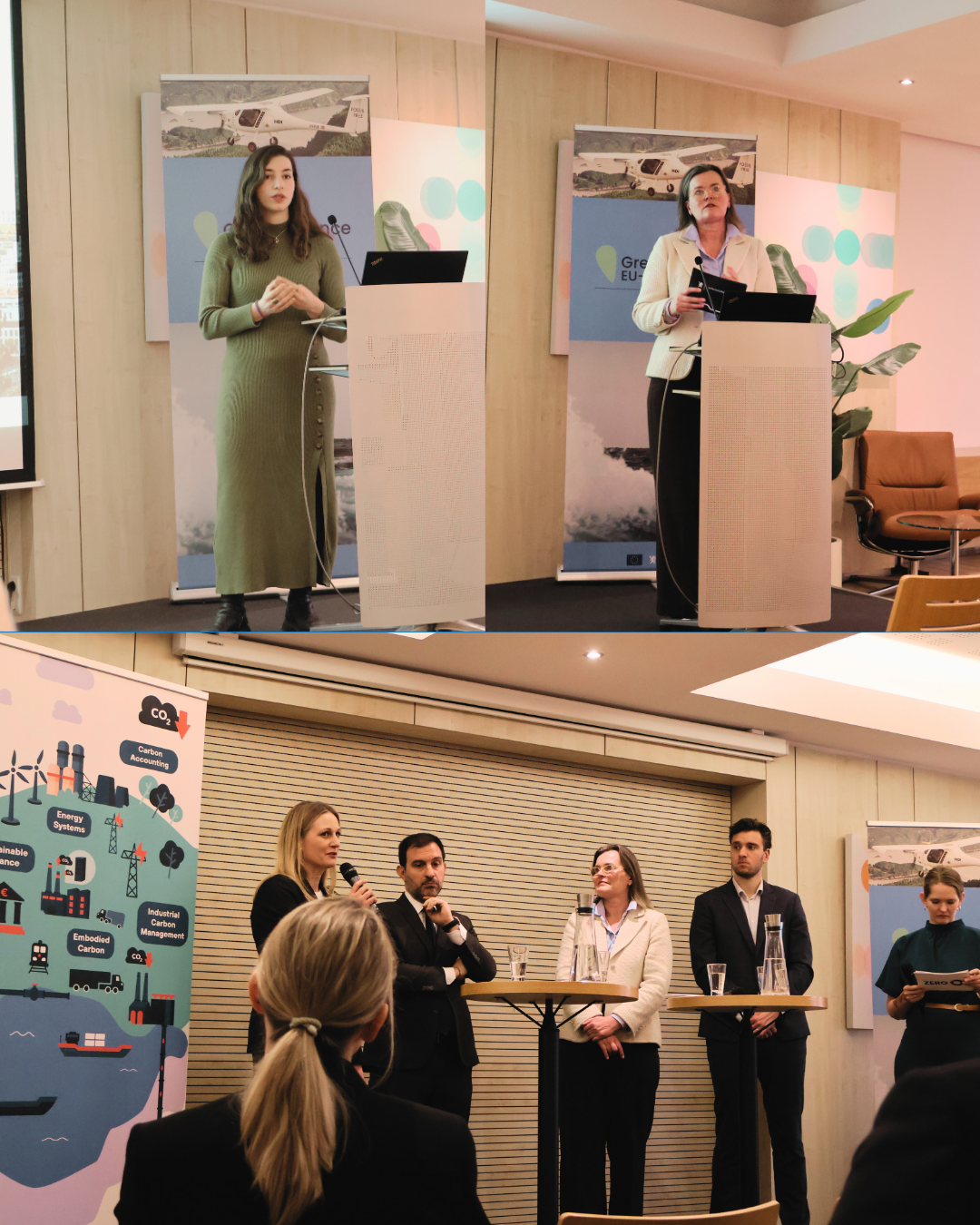
On 24 February 2025, Bellona Europa co-hosted a breakfast seminar at Norway House in Brussels alongside ZERO and the Mission of Norway to the EU, bringing together policymakers, manufacturers, and procurement practitioners around a single conviction: European cities hold a decisive and largely untapped lever for decarbonising construction. With the revision of the EU Public Procurement Directives on the horizon, the moment to use it is now.
Get our latest news