
Joint letter – ICC reform and expansion risks diverting ETS Revenues from real climate action
In light of the European Commission’s ongoing considerations to amend the ETS State Aid Guidelines, revising the rules for Indirec...
News
Publish date: November 24, 2010
News
The project has been implemented with financial support provided by the Nordic Environment Finance Corporation (NEFCO). NEFCO, as follows from the organisation’s website, is an international financial institution established by five Nordic countries – Denmark, Finland, Iceland, Norway and Sweden – which finances investments and projects primarily in Russia, Ukraine, Estonia, Latvia, Lithuania, and Belarus “in order to generate positive environmental effects of interest to the Nordic region.”
NEFCO has been a sizable presence in Murmansk Region for a few years now. In this northern area, the corporation has offered a number of attractive credits to allow municipalities to develop energy efficient and environmentally friendly technologies that they would be hard-pressed to find money for otherwise.
Up-to-date heating systems in public buildings is one such example. The logic is simple: The fewer resources the city will spend on supplying heat to schools, kindergartens, hospitals, and other municipal buildings, the easier the burden will be on the local environment, while the authorities will also be able to save on fuel costs. Furthermore, in order to obtain a NEFCO credit, municipal administrations do not have to contact the corporation directly: All they have to do is make a call to one of the locally established Centres for Energy Efficiency. These organisations then put municipalities in touch with NEFCO.
“The project in Olenegorsk has been in the works for a very long time. Apparently, the former administration of the town was not particularly interested. Then there was a change in management, and this year, we finally started to do some constructive work,” Yury Zelenkov, executive director of the Kola Energy Efficiency Centre, told Bellona. “Besides, the Federal Energy Saving Programme is in progress now, which prescribes certain [energy efficiency] measures to be implemented by all building owners within three years.”
According to Zelenkov, one of the programme’s requirements was, in particular, that building owners should have energy saving plans developed by August 1. The next measure implies issuing energy efficiency certificates for the buildings. Disregarding the programme’s instructions is punishable by fines that could cost authorities up to RUR 50,000 (EUR 1,180).
The administration of Olenegorsk must have chosen to go along with the programme, rather than paying a fine, and turned to NEFCO for help replacing heating systems in the town’s schools and kindergartens. NEFCO provided Olenegorsk with a RUR 9 million credit payable within five years. Another million roubles was contributed out of Olenegorsk’s own funds.
As a result, Olenegorsk schools and kindergartens are being supplied now with heat from fourteen so-called “heating centres” established in the town. A “heating centre” is a system that balances out the distribution of the heat carrier in such a way that temperature in all rooms remains at the needed level. Additionally, thanks to such a system, each building owner can regulate heat supply so as to use exactly as much thermal energy as is needed for particular purposes.
“The control system of such a centre has a “weekly hours” option, which allows one to select a particular heating mode for a [particular period of time],” Zelenkov explained. “We don’t need to heat a building 24 hours a day, now do we, if it’s only for eight hours a day that there are people inside it. So we are now adjusting these heating modes. So that in the morning, when kids come, it will be warm in the rooms, and the temperature does not drop during the day – until the classes are over. That’s how we’ll start saving energy.”
The experience the Kola Energy Efficiency Centre has gained so far shows such projects pay off within five years and help save up to 25 percent in heating costs during the winter and up to 60 percent in the spring and autumn.
According to Bellona-Murmansk’s energy projects coordinator Yury Sergeyev, Murmansk Region, just like many other regions in Russia, has a huge energy saving potential at its disposal.
“Look around you,” Sergeyev says, “we are used to being so wasteful, have always been – we like our surroundings to be warm. Realising our energy saving potential has been taking very long.”
But he is hopeful that the success of the project in Olenegorsk will compel authorities in other towns in the region to give a thought to implementing such projects in their own municipalities.
“A well-working energy saving and energy efficiency policy, coupled with the development of renewable energy, should be a solution not only and not so much for economic problems as for ecological ones as well, of which today the most pressing one is global climate change,” Sergeyev said.
In light of the European Commission’s ongoing considerations to amend the ETS State Aid Guidelines, revising the rules for Indirec...
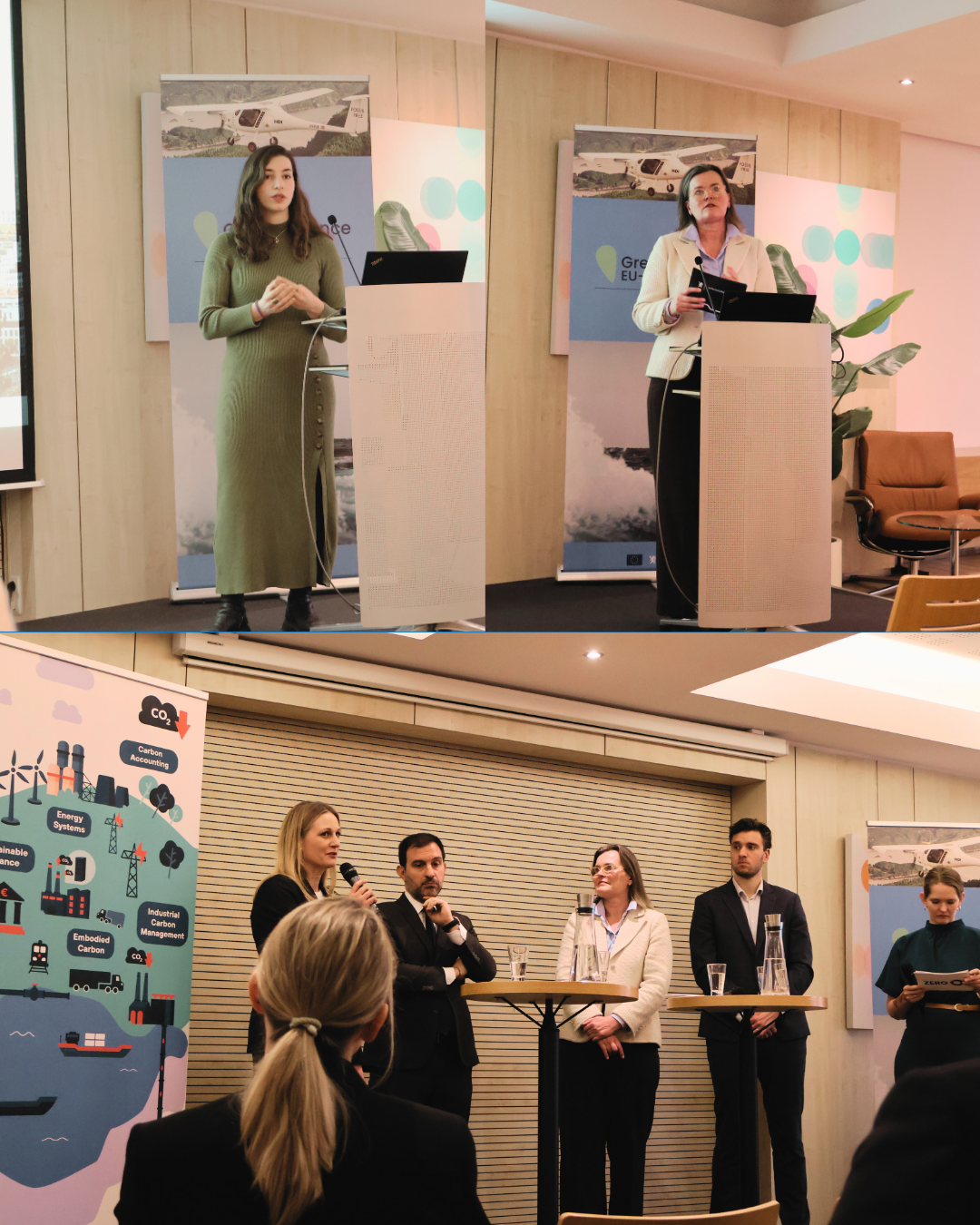
On 24 February 2025, Bellona Europa co-hosted a breakfast seminar at Norway House in Brussels alongside ZERO and the Mission of Norway to the EU, bringing together policymakers, manufacturers, and procurement practitioners around a single conviction: European cities hold a decisive and largely untapped lever for decarbonising construction. With the revision of the EU Public Procurement Directives on the horizon, the moment to use it is now.

Opening remarks and future of EU CRCF Market Christian Holzleitner, Head of Unit for Land Economy and Carbon Removals&nb...

Together with six NGOs and five industry partners, Bellona Europa signed a joint letter on the RFNBO Delegated Act, reiterating that now is not the t...
“The Commission shall monitor the situation at Union level with a view to monitoring the impact of the CBAM on the Union i...
Get our latest news