
Joint letter – ICC reform and expansion risks diverting ETS Revenues from real climate action
In light of the European Commission’s ongoing considerations to amend the ETS State Aid Guidelines, revising the rules for Indirec...
News

Publish date: June 17, 2011
News
The CDM is a provision in the Kyoto Protocol whose purpose is to ensure that climate cuts are made where they are cheapest to implement. Nations that have specific commitments to emissions reductions – all of which are relatively highly developed countries – can use the CDM to fund CO2 emissions reduction projects in developing nations, and thereby offset their own CO2 emissions
“For humanity as a whole, it is arguably rational to move money from dirty to climate-friendly production,” said Cameron. “Unfortunately it happens far too rarely today”
Cameron’s speech was the first during Bellona’s 25th anniversary conference’s section on climate friendly investment.
“The financial world is divided into small companies that do not act in line with common interests, they do not take care to involve themselves at a system-wide level,” he said. “This is an important reason why today a ton of money is run into polluting projects while environmentally friendly [projects] are left with crumbs.”
He added that, “Mercer Consulting has come forward to say that if the climate issue was to be is dealt with, they will would have to invest an entire 40 percent of their enormous portfolio in emissions reducing projects. We are far, far away from that today.”
Despite this, Cameron say that some trends give cause for optimism.
“Although the sums are far too low, the Kyoto Protocol’s Clean Development Mechanism (CDM) actually led to the funding of major climate projects in developing countries,” he said. “If [investing] parties are obliged to climate cuts, and then are given some flexibility in how they are implemented, the capital will begin to flow. The CDM has done just that, and that must be applauded.”
Cameron believes that the CDM, which has been criticized for a lack of efficiency and for being counter-productive, has been met with too much skepticism.
“Even within the environmental movement the CDM has been criticized. When it is one of the few measures that have succeeded in moving capital to good climate projects, this is unreasonable” he said.
Cameron started his company seven years ago, but he believes that it has already proven the case for climate investment.
“We have channeled a total of over $1 billion to reduce emissions in China alone. They have cut thousands of tons of CO 2 from the silk, cement, iron and steel industries – and the investments are paying off,” said Cameron.
A higher and more comprehensive pricing system for CO 2 emissions is the most important factor to channel more money into the climate in the future, said Cameron.
“An efficient and large-scale capital movement will require a carbon price for the entire economy,” he said.
He also drew attention to the importance of tax breaks for research and innovation on climate change solutions – before he finished praising Bellona’s communication strategy:
“If we get people to make long-term investment in good environmental projects, we must have a positive story to tell. Bellona is doing a lot right – you show the successes that exist.”
In light of the European Commission’s ongoing considerations to amend the ETS State Aid Guidelines, revising the rules for Indirec...
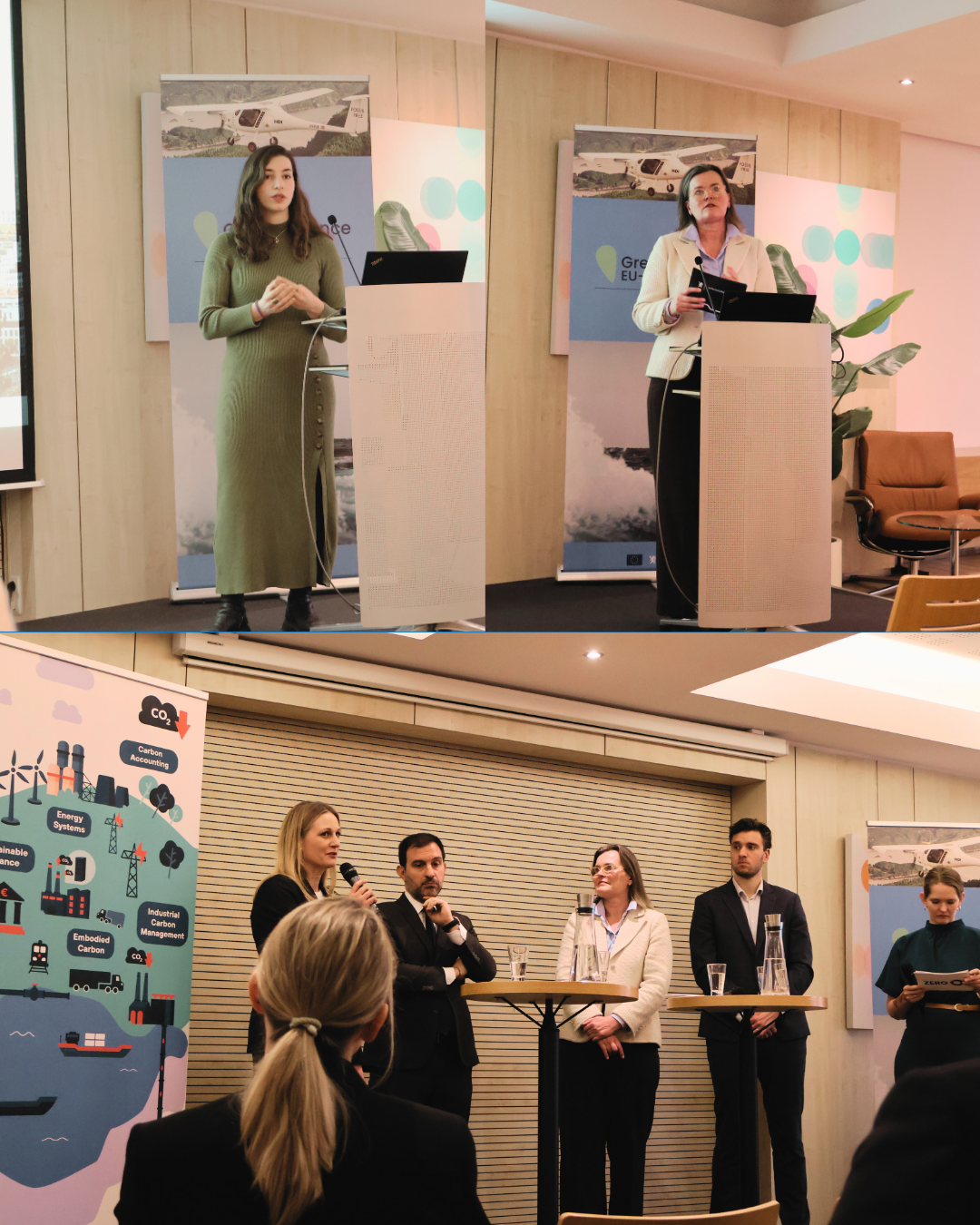
On 24 February 2025, Bellona Europa co-hosted a breakfast seminar at Norway House in Brussels alongside ZERO and the Mission of Norway to the EU, bringing together policymakers, manufacturers, and procurement practitioners around a single conviction: European cities hold a decisive and largely untapped lever for decarbonising construction. With the revision of the EU Public Procurement Directives on the horizon, the moment to use it is now.

Opening remarks and future of EU CRCF Market Christian Holzleitner, Head of Unit for Land Economy and Carbon Removals&nb...

Together with six NGOs and five industry partners, Bellona Europa signed a joint letter on the RFNBO Delegated Act, reiterating that now is not the t...

“The Commission shall monitor the situation at Union level with a view to monitoring the impact of the CBAM on the Union i...
Get our latest news