
Joint letter – ICC reform and expansion risks diverting ETS Revenues from real climate action
In light of the European Commission’s ongoing considerations to amend the ETS State Aid Guidelines, revising the rules for Indirec...
News

Publish date: April 21, 2016
News
BRUSSELS – The year 2016 will be a decisive year in terms of EU Member States’ preparatory process for the implementation of the Alternative Fuels Infrastructure (AFI) directive. In fact, by November 2016, Member States will have to have submitted their so-called National Policy Frameworks (NPFs), outlining how they aim to go about the directive’s transposition.
The months leading up to November will therefore be crucial for creating a common understanding, among Member States as well as EU policy makers, of how best to implement the directive and how to overcome technical and non-technical barriers to interoperability. This brief, therefore, provides a number of recommendations for the interpretation of the AFI directive so as to ensure its uniform implementation across EU countries. By drawing on best practices and lessons learnt from the Norwegian EV success story, this brief also shares Bellona’s recommendations for overcoming interoperability issues central to electro-mobility, namely: standard- and fast-charging infrastructure, and the potential synergies with electric infrastructure already in place for public transport; smart charging; electricity roaming; payment solutions; and parking schemes.
The past year has been important in terms of putting the transport sector in the spotlight, by unmasking the commonplace nature of car makers’ fraudulent emission testing practices and by bringing an increasing number of actors in agreement over the need to transition to electric transport[1].
2016 looks promising for building on this momentum, with a number of upcoming opportunities to highlight and accelerate the wider uptake of electric vehicles (EVs).
In the second quarter of 2016, for instance, the European Commission is expected to present a proposal for a post-2020 Effort Sharing Decision (ESD), which will be accompanied by a Communication on the Decarbonisation of Transport. Furthermore, 2016 will be a decisive year in terms of EU Member States’ preparatory process for the implementation of the Alternative Fuels Infrastructure (AFI) directive. In fact, by November 2016, Member States will have to have submitted their so-called National Policy Frameworks (NPFs), outlining how they aim to go about the directive’s transposition.
In this brief, Bellona urges EU Member States to consider in their NPFs:
[1] Paris Declaration on Electro-mobility and Climate Change and Call to Action (December 2015), http://newsroom.unfccc.int/lpaa/transport/the-paris-declaration-on-electro-mobility-and-climate-change-and-call-to-action/
Authors: Teodora Serafimova
Publisher: Bellona Europa
In light of the European Commission’s ongoing considerations to amend the ETS State Aid Guidelines, revising the rules for Indirec...

Three main asks: Set robust low-carbon definitions as soon as possible: Without clear thresholds, non-price criteria in procurement lack the dec...
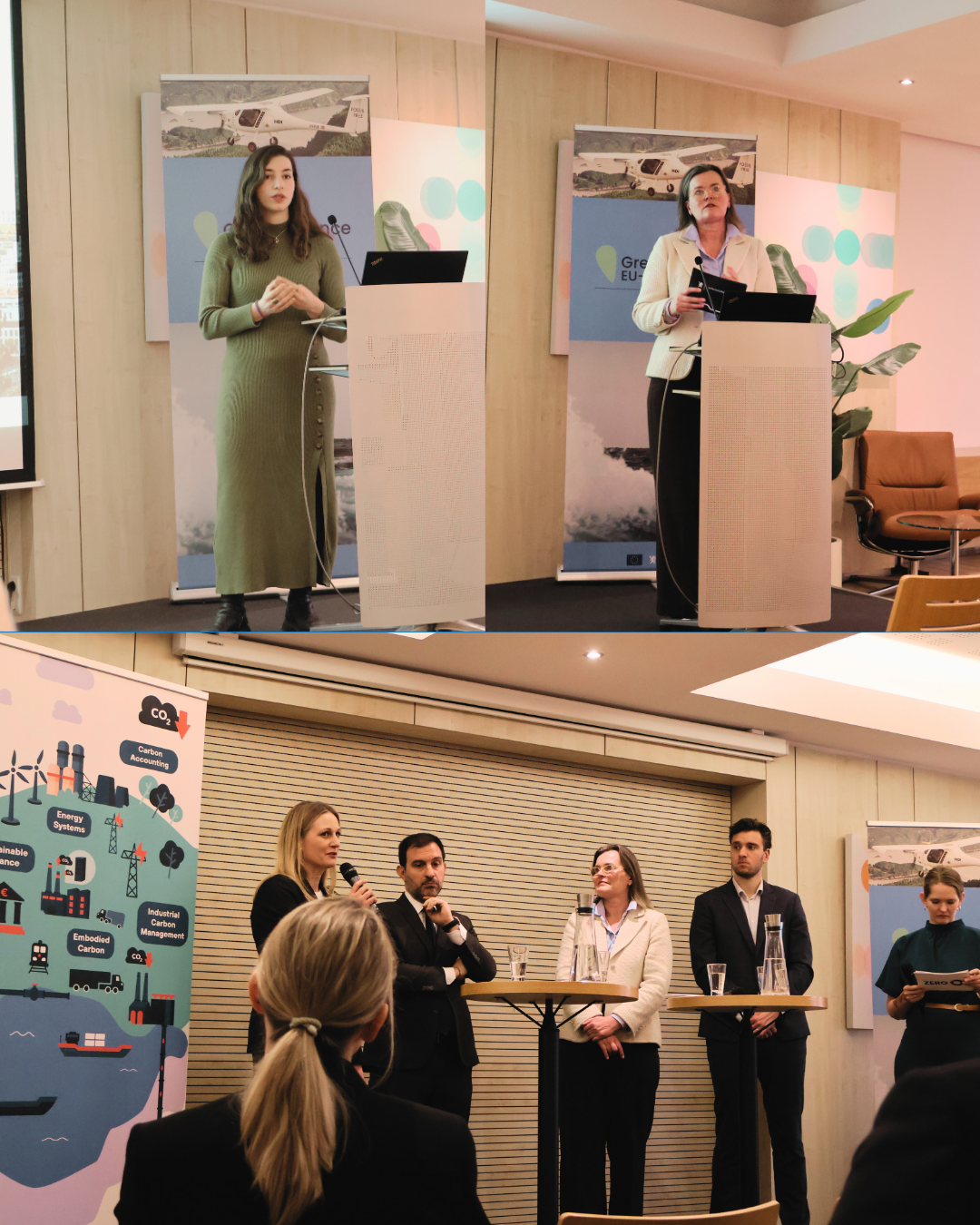
On 24 February 2025, Bellona Europa co-hosted a breakfast seminar at Norway House in Brussels alongside ZERO and the Mission of Norway to the EU, bringing together policymakers, manufacturers, and procurement practitioners around a single conviction: European cities hold a decisive and largely untapped lever for decarbonising construction. With the revision of the EU Public Procurement Directives on the horizon, the moment to use it is now.

Opening remarks and future of EU CRCF Market Christian Holzleitner, Head of Unit for Land Economy and Carbon Removals&nb...

Together with six NGOs and five industry partners, Bellona Europa signed a joint letter on the RFNBO Delegated Act, reiterating that now is not the t...
Get our latest news