
Joint letter – ICC reform and expansion risks diverting ETS Revenues from real climate action
In light of the European Commission’s ongoing considerations to amend the ETS State Aid Guidelines, revising the rules for Indirec...
News

Publish date: July 9, 2020
News
On Wednesday the 8th of July, the European Commission has adopted two strategies to transform Europe’s energy system: the Energy System Integration and the Clean Hydrogen strategies.
The EU Strategy for Energy System Integration is said to provide the framework for the green energy transition, towards a more efficient and interconnected energy sector.
An important element is the proposal for the development of a comprehensive terminology for renewable and low carbon fuels, a sphere where ambiguity on CO2 input and output has allowed a delay of available actions in favour of wishful thinking and creative future accounting. This provides a relevant example of how system integration could add complexity that undermines climate action.
If the goal of this strategy is to create “the pathway towards an effective, affordable and deep decarbonisation of the European economy in line with the Paris Agreement”, then smart sector integration actions should directly and as a priority contribute to emission reductions in line with a net zero by 2050 pathway. As we underlined in our joint policy briefing Recycled Carbon Fuels in the Renewable Energy Directive : getting both terminology and accounting right will be crucial.
Bellona Europa has recommended the use of screening criteria and their respective metrics for the initial climate evaluation of EU Smart Sector Integration actions. We stand by our proposal and would like to recall our recommendations for this strategy:
In light of the European Commission’s ongoing considerations to amend the ETS State Aid Guidelines, revising the rules for Indirec...

By Amélie Laurent, CDR Policy Advisor, Bellona Europa Published in REVOLVE Today, EU countries approved Europe’s 2040 climate target:...

The new EU Ports Strategy rightly recognises that ports are no longer just logistics hubs – they are be...

Three main asks: Set robust low-carbon definitions as soon as possible: Without clear thresholds, non-price criteria in procurement lack the dec...
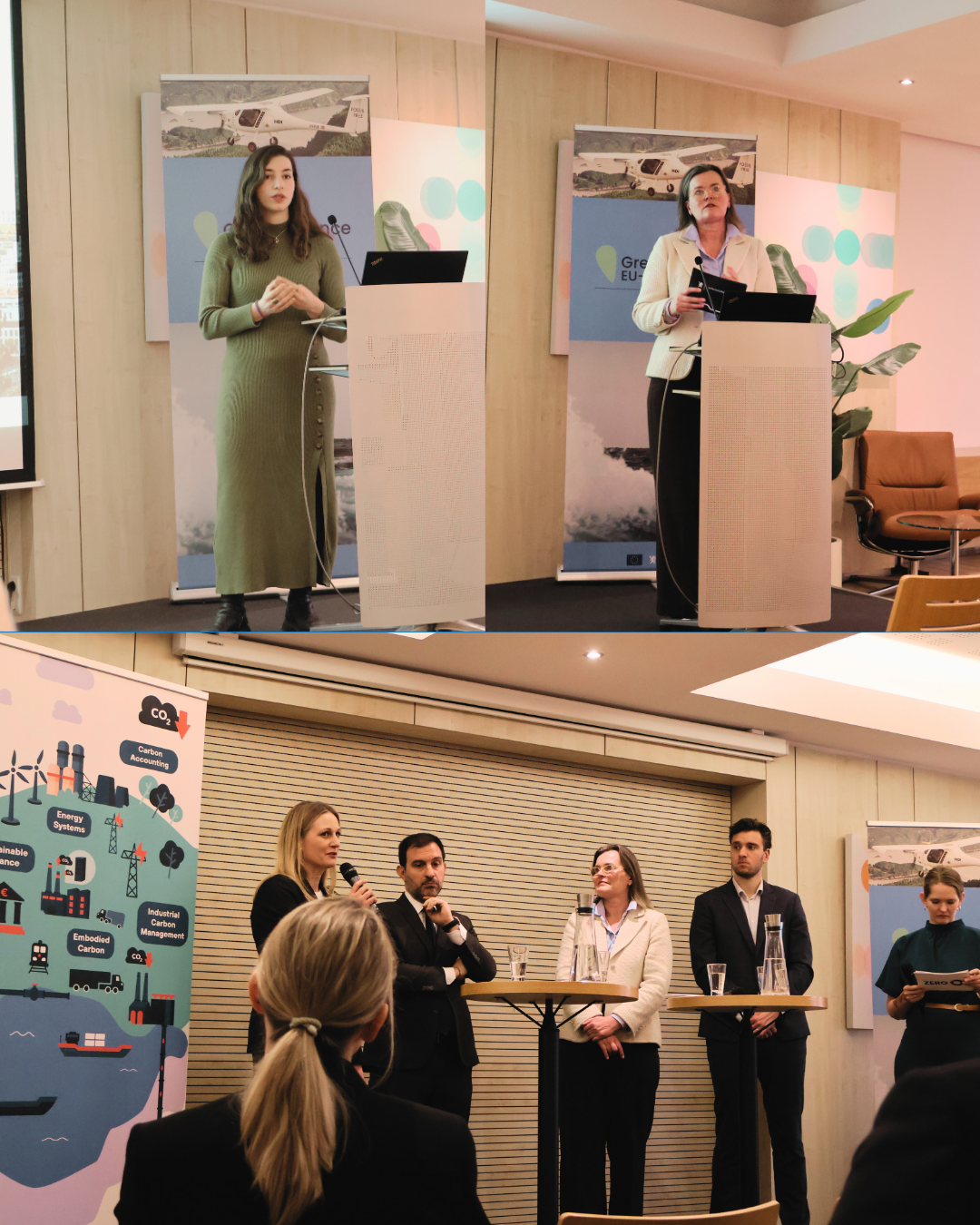
On 24 February 2025, Bellona Europa co-hosted a breakfast seminar at Norway House in Brussels alongside ZERO and the Mission of Norway to the EU, bringing together policymakers, manufacturers, and procurement practitioners around a single conviction: European cities hold a decisive and largely untapped lever for decarbonising construction. With the revision of the EU Public Procurement Directives on the horizon, the moment to use it is now.
Get our latest news