
Joint letter – ICC reform and expansion risks diverting ETS Revenues from real climate action
In light of the European Commission’s ongoing considerations to amend the ETS State Aid Guidelines, revising the rules for Indirec...
News

Publish date: December 5, 2023
News
The International Organisation for Standardisation presented new clean hydrogen standards at COP28. Whilst this is an encouraging step forward in calculating climate impacts of hydrogen production, this new methodology fails to set an emission threshold to guide policymakers in distinguishing clean hydrogen and more polluting varieties. This makes the new clean hydrogen standard a potential greenwashing tool for dirty hydrogen.
«The ISO hydrogen standard announced today potentially increases confusion of what should classify as ‘clean’ hydrogen, instead of simplifying it. By failing to establish a threshold for emissions from hydrogen production, it is at best an emissions calculator – at worst a greenwashing tool for dirty hydrogen.
It puts the onus on individual countries to decide what is ‘clean’ hydrogen, paving the way for a complex and fragmented future hydrogen trade.»

Marta Lovisolo
Senior Policy Advisor, Renewable Energy Systems
Bellona welcomes COP28’s Declaration of Intent on Mutual Recognition of Certification Schemes for Hydrogen and Hydrogen Derivatives, as kickstarting a global hydrogen market requires international standards for which types of hydrogen can be considered clean.
«Put simply, hydrogen that complies with the ISO standard launched today does not necessarily mean it’s ‘low-carbon’.
This is a missed opportunity to introduce a hydrogen standard with true climate safeguards – most importantly an emissions threshold – which could have been the basis for scaling up clean hydrogen globally.»

Luisa Keßler
Policy Advisor Sustainable Hydrogen Economy, Bellona Deutschland
Read our press release:
In light of the European Commission’s ongoing considerations to amend the ETS State Aid Guidelines, revising the rules for Indirec...
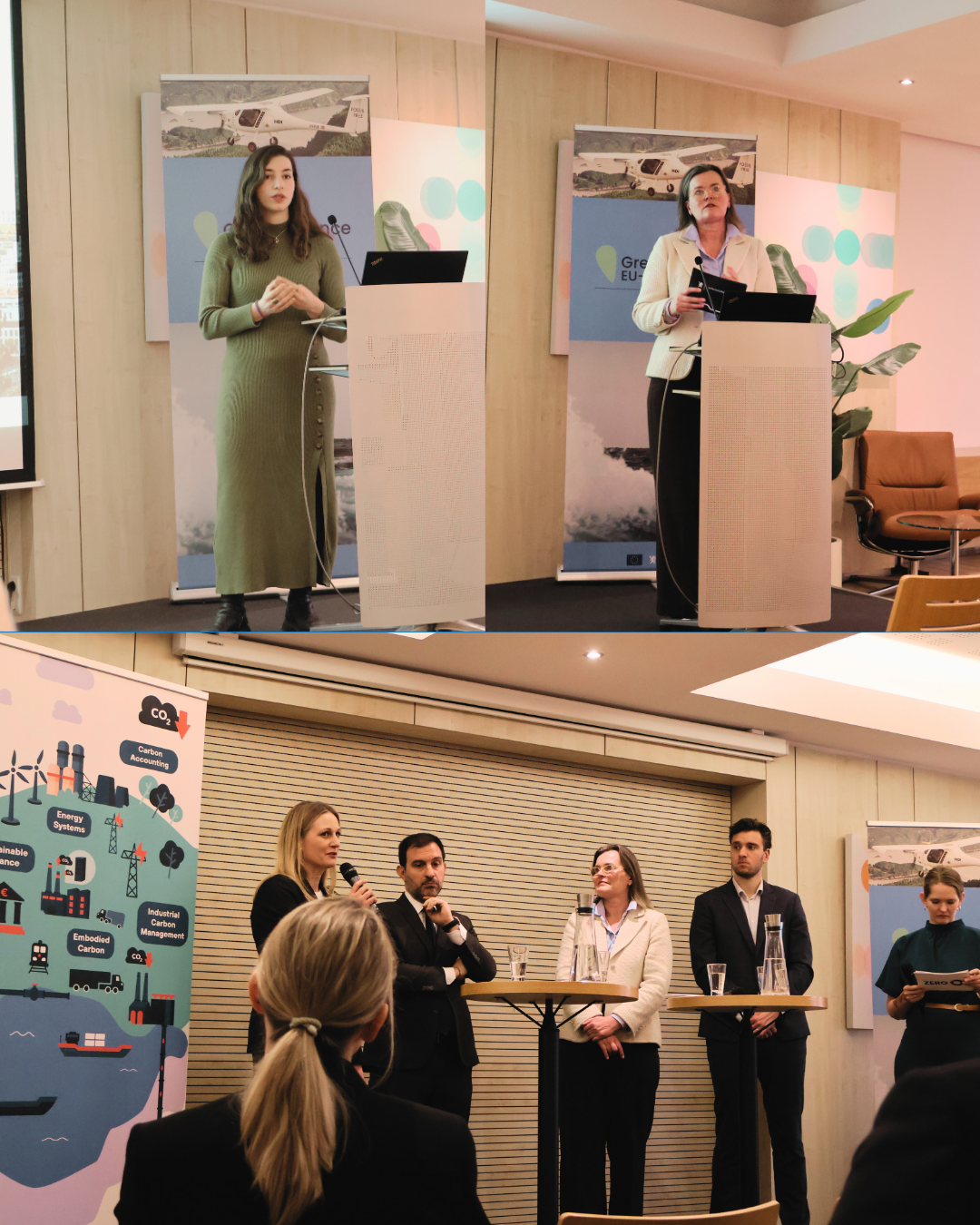
On 24 February 2025, Bellona Europa co-hosted a breakfast seminar at Norway House in Brussels alongside ZERO and the Mission of Norway to the EU, bringing together policymakers, manufacturers, and procurement practitioners around a single conviction: European cities hold a decisive and largely untapped lever for decarbonising construction. With the revision of the EU Public Procurement Directives on the horizon, the moment to use it is now.

Opening remarks and future of EU CRCF Market Christian Holzleitner, Head of Unit for Land Economy and Carbon Removals&nb...

Together with six NGOs and five industry partners, Bellona Europa signed a joint letter on the RFNBO Delegated Act, reiterating that now is not the t...
“The Commission shall monitor the situation at Union level with a view to monitoring the impact of the CBAM on the Union i...
Get our latest news