
Joint letter – ICC reform and expansion risks diverting ETS Revenues from real climate action
In light of the European Commission’s ongoing considerations to amend the ETS State Aid Guidelines, revising the rules for Indirec...
News

Publish date: July 9, 2025
News
Summary
On July 1st 2025, Denmark assumed the Presidency of the Council of the European Union, which it will hold until December 31st. Under the slogan “A strong Europe in a changing world”, the Danish Presidency aims to strengthen Europe’s security and economic resilience. Unity, stable democracies, resilient and socially just economies, are placed at the heart of a strong Europe. In the new Presidency’s programme, the green transition frames the path through which the Presidency aims to achieve this vision.
From securing clean energy to updating regulations and investing in green infrastructure, the Danish Presidency is showing a clear commitment to pushing forward an ambitious and integrated European Green Deal. In this article, we share Bellona’s take on some of the key climate policies addressed by the Presidency’s programme.
Bellona welcomes the Danish Presidency’s commitment to reaching an agreement on the EU’s 2040 climate target before COP30. We count on the Presidency to lead negotiations toward a general approach that aligns the target with scientific recommendations for at least 90% emissions reduction, ensures the 2035 target is in line with the pathway to 90% by 2040, excludes international carbon credits that risk diluting domestic action, and establishes separate and clear targets for emissions reductions, permanent removals and land-use, land-use change and forestry.
Clear intermediary milestones will enable EU businesses to plan their clean industrial transition and make necessary green investments, helping secure long-term competitiveness, as also highlighted by the Presidency. Strong leadership from the Presidency will be essential to position the EU as a credible climate leader ahead of COP30 in Belém, sending a powerful signal to the global community that the EU remains committed to become the first climate-neutral continent of the world by mid-century.
Bellona welcomes the Presidency’s commitment to a secure and energy-independent Europe, increased generation of affordable clean energy, and reinforced green infrastructure development and connectivity.
Likewise, focusing on the electrification agenda and strengthening the investment framework, reflect a strategic and forward-looking approach to enabling long-term sustainability and competitiveness across the EU. To achieve that, prioritising energy efficiency while modernising and expanding electricity grids will be crucial.
The multifaced goals that the Presidency intends to achieve require system-level thinking and planning. This is why, as the presidency prepares for the negotiations on EU energy initiatives in the context of the 2028-2034 Multiannual Financial Framework, it will be critical to ensure that financial resources for electricity networks are increased, including through expanded financing from the Connecting Europe Facility (CEF).
Turning the green transition into reality also requires a coherent regulatory framework grounded in credible environmental reporting. While Bellona welcomes the high priority given by the Presidency to the need for administrative simplifications that ease and streamline businesses environmental reporting, this cannot come at the expense of the credibility of EU’s climate legislation. In its current form, the Omnibus package proposal would severely cripple the quality of environmental reporting, thereby putting the implementation of the green transition at risk.
By excluding over 80% of companies from the duty to report, making green transition plans voluntary and preventing national governments to enhance their reporting systems, the package severely undermines the stated goals of the Corporate Sustainability Reporting and Corporate Sustainability Due Diligence Directives.
The same principle applies to the financial sector, where regulatory reform must serve the green transition rather than weaken it.
The revision of the Sustainable Finance Disclosure Regulation is indeed an initiative strongly endorsed by Bellona. Yet, streamlining requirements and simplification of procedures must not come at the expense of data quality and granularity, which are core components of sustainable finance, not a ‘nice to have’.
Environmental integrity and regulatory clarity must also extend to carbon pricing and trade mechanisms.
Bellona welcomes the prioritisation of a strong Carbon Border Adjustment Mechanism (CBAM), especially considering that the Danish presidency will oversee the transition towards its definitive phase in 2026. We share the Presidency’s concern about the importance of a CBAM that addresses the risk of carbon leakage risks while supporting the decarbonisation of energy-intensive sectors. This is something Bellona has long pushed for, both within and beyond the borders of Europe.
That is why a strong CBAM must also include indirect emissions arising from most energy-intensive sectors.
Bellona welcomes the Presidency’s intention to begin discussions on the European Port Strategy. A comprehensive design and implementation of the strategy are crucial to ensure that energy transition and industrial decarbonisation occur harmoniously and efficiently.
The EU Port Strategy should be centred on exploiting synergies with key EU industrial decarbonisation and competitiveness policies. EU harbours are crucial to achieve EU-wide emission reductions and ensuring the effective implementation of key climate policy tools, such as CBAM and EU ETS, while mitigating carbon leakage risks arising from moving transshipment activities to ports outside the EU.
Likewise, the upcoming Port Strategy should be linked to policies that promote lead markets for green products. Ultimately, ports are also crucial for supporting onshore power supply and the electrification of industrial processes. Therefore, their role should be strengthened, including through adequate CEF funding to scale up CO₂ transportation infrastructure development, for which ports serve as cornerstone.
Bellona notes with some surprise the absence of any reference to Carbon Capture and Storage (CCS) technologies, particularly considering the upcoming EU CO₂ transport market regulation, and Denmark’s leadership in advancing CCS across Europe. A harmonised regulatory framework is critical to ramp-up CO₂ capture and facilitate cross-border transport. None of these considerations, however, are reflected in the Presidency’s priority. We urge the Presidency to utilise its extensive experience and knowledge on CCS deployment and actively partake in the coordination and development of appropriate regulatory frameworks.
Bellona welcomes that the Presidency places the revision of the Public Procurement Framework and the negotiations on the Industrial Decarbonisation Accelerator Act at the top of the agenda. Bellona has long emphasised that strong demand signals remain indispensable to make low-carbon technologies viable and attractive across the EU’s energy-intensive industries, including the construction sector. That is why, Bellona urges to ensure that the upcoming revision of the Public Procurement Directives goes beyond the mere possibility of including environmental criteria but rather introduce their mandatory application, as stated in the Buy Better to Build Better (BBBB) manifesto.
Likewise, tools put forward by the Industrial Decarbonisation Accelerator Act such as product labels must be grounded in scientifically based, robust, and harmonised accounting methodologies.
Beyond materials, the upcoming revision of the Energy Taxation Directive (ETD) provides the Presidency with a unique opportunity to address emissions from construction sites themselves. The current preferential tax treatment for diesel non-road mobile machinery (NRMM) used in construction is environmentally harmful and distorts the market against emerging zero-emission technologies. Revising the ETD to phase out these exemptions would level the playing field for zero-emission machinery, accelerate market uptake, and support the growth of a competitive European clean technology sector. At the same time, the Sustainable Transport Investment Plan must explicitly consider the future surge in electricity demand from the widespread deployment of zero-emission NRMM to ensure sufficient grid capacity and charging infrastructure.
Bellona welcomes the Danish Presidency’s acknowledgment of biotechnology and bio-based solutions as key drivers of the green transition. To this end, we call on the EU to emphasise the strategic role of low-trophic aquaculture as a sustainable marine biomass source for bio-based industries.
Bellona also appreciates the Danish Presidency’s commitment to the revision of the EU Bioeconomy Strategy. To genuinely contribute to climate and environmental goals, the strategy must cover the entire value chain and promote the targeted use of limited biomass resources, while staying aligned with broader EU climate and biodiversity commitments.
Although the Presidency programme highlights the threats to food security and biodiversity arising from the deterioration of European seas, the absence of a reference to the Arctic region is somewhat striking. As of May, Denmark holds the rotating chairmanship of the Arctic Council. This dual role of Denmark as President of the Council of the EU and Chair of the Artic Council presents a unique opportunity to build on the EU’s strategic relevance to the Arctic region and protect its unique characteristics. The region is extremely vulnerable to climate change and the consequences of a changing Arctic climate extend far beyond its borders. The EU cannot stand idly by.
We believe that the EU and the Danish Presidency must work together to stop oil and gas extraction in the Arctic and prevent the development of deep-sea mining. Another pressing issue is the possible consolidation of the Northern Sea Route as a preferred trade corridor between Europe and Asia. Russia is promoting this route to increase its strategic influence and generate new revenues, which could help finance the war against Ukraine. Considering the Presidency’s high prioritisation of security issues, the lack of attention to the Arctic is even more surprising. In addition to geopolitical risks, growing maritime traffic in the Arctic increases the danger of environmental accidents in an area that does not have the necessary infrastructure to ensure swift and effective emergency response.
Through the combined leverage of the Chair of the Arctic Council and the Council of the EU Presidency, Denmark and the EU have the opportunity to advocate for the preservation of the Arctic.
The Danish Presidency programme places the green transition at the heart of its vision for a stronger Europe. As such, Bellona positively welcomes its commitment to expanding clean energy infrastructure, promoting an effective regulatory environment, strengthening the CBAM and sending strong demand signals for low-carbon products. These are key enablers for decarbonising energy-intensive industries and securing their long-term competitiveness. The Presidency’s focus on the development of a resilient bioeconomy is also a promising step forward.
Looking ahead, we encourage the Presidency to keep upcoming policy developments in line with the ambition of the European Green Deal. The 90% net emissions reduction target for 2040 must be solid and not watered down by loopholes and flexibilities, and the 2035 target to be communicated in the NDC must be linked to the 2040 target.
In light of the European Commission’s ongoing considerations to amend the ETS State Aid Guidelines, revising the rules for Indirec...
On 19 March, Bellona Europa, Oslo’s Climate Agency, Hafslund Rådgivning, and SINTEF hosted the concluding conference of the Powering-Up a REnew...

On March 10th 2026, the Commission presented the Clean Energy Investment Strategy, as part of an Energy package to boost investment in homegrown cle...

By Amélie Laurent, CDR Policy Advisor, Bellona Europa Published in REVOLVE Today, EU countries approved Europe’s 2040 climate target:...
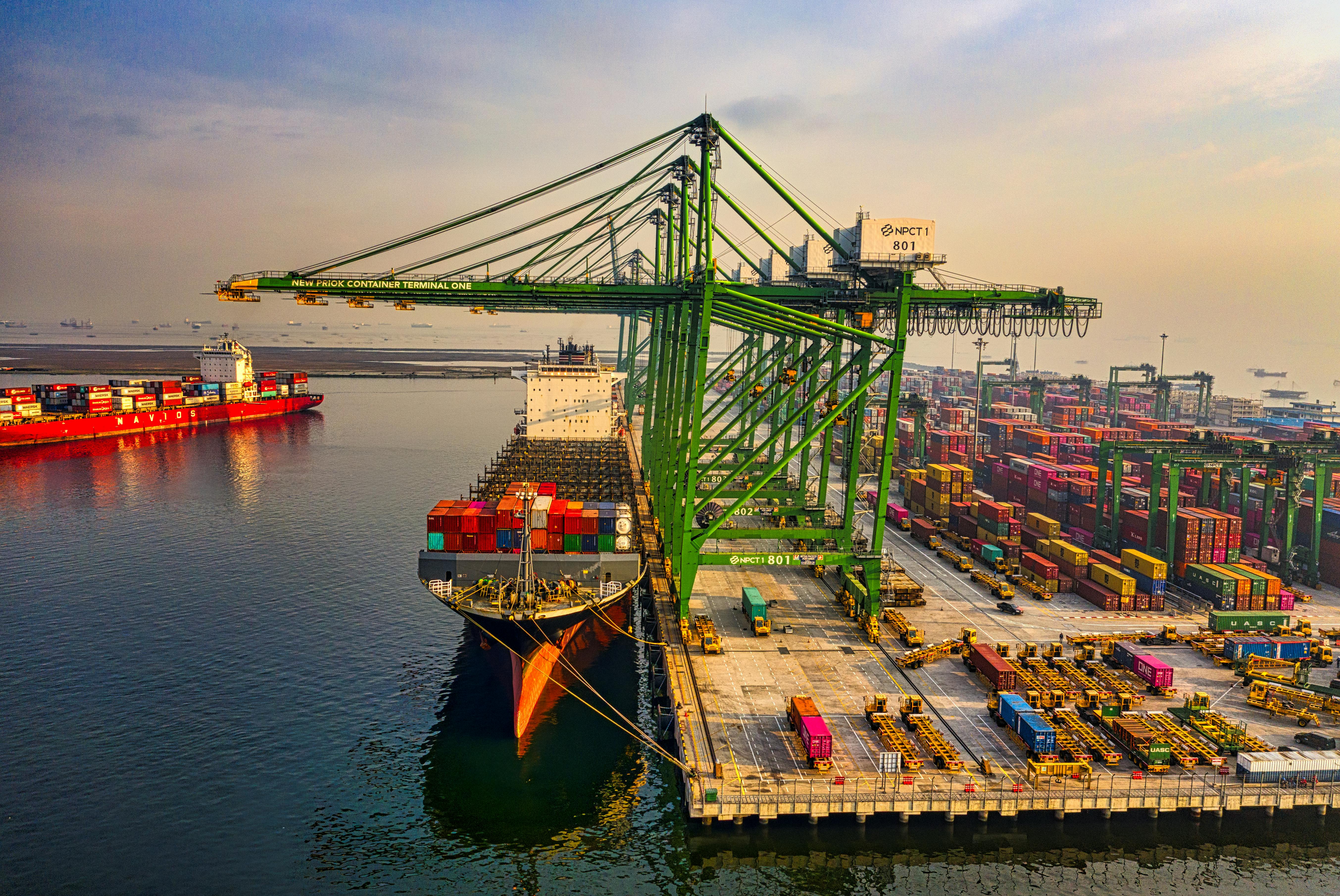
The new EU Ports Strategy rightly recognises that ports are no longer just logistics hubs – they are be...
Get our latest news