
Joint letter – ICC reform and expansion risks diverting ETS Revenues from real climate action
In light of the European Commission’s ongoing considerations to amend the ETS State Aid Guidelines, revising the rules for Indirec...
News

Publish date: September 19, 2025
News
Yesterday, EU environment ministers agreed on a statement of intent setting a potential emission reduction range of 66.25% to 72.5% by 2035. This range risks opening the door to an unambitious NDC, delaying necessary emissions reductions and sending the wrong signal to the rest of the world. While this is a positive step forward that ministers adopted a statement of intent, it should reflect the full range of ambition, including a 2035 target of 79% reductions.
Key asks:
«By setting a weak lower bound of 66%, EU environment ministers are already packing uncertainty and question marks in the EU’s briefcase for COP. What is currently on the table would blow out the scientific advisory board’s suggested EU carbon budget by stepping on the brakes and adding an extra 1.4 billion tonnes of CO₂, to the atmosphere compared to a linear trajectory.»

Amélie Laurent
Policy Advisor, CDR
«EU credibility is on the line. If this is the best the world can expect from the EU, how can the EU expect more from other countries at COP, urging them to protect their natural sinks, or invest in decarbonisation if we don’t do the same at home? We need strong, domestic and science-based climate targets for 2035, set at 79% and 90% for 2040.»

Mark Preston Aragonès
Head of Carbon Accounting
A weak signal in the middle of the climate crisis
The lower end of the range (66.25%) represents a linear trajectory between the EU 2030 target of 55% and the 2050 climate neutrality target. In practice, following this path instead of a linear one (72.5%), aligned with the 2040 proposed target of 90%, would release an additional 1.4 billion tonnes of CO₂ in the atmosphere, which represents more than 45% of EU emissions in 2023. This would further shrink our remaining global carbon budget.

Europe should be a leader globally, instead of leaving its NDC and 2040 target to the last minute. With both the February and September deadlines missed to submit an EU NDC, there is now a real risk that the EU will arrive at COP30 without a clear 2035 NDC, required by the Paris Agreement. Member States can still correct the course and set science-based and strong climate targets for 2035 and 2040 ahead of COP30.
However, we welcome to finally have a statement of intent, which makes clear that the agreement on the 2040 target will inform the 2035 NDC and that NDCs must show progression, retaining the key principle of ‘ratcheting up’ climate ambition.
2040 target must align climate action with competitiveness
During the Environment Council, ministers also held a policy debate on the 2040 EU climate target focusing on two specific issues: the possible contribution of international carbon credits and the role of land sinks.
International carbon credits must not count towards the 90% proposed target. This goes against the domestic scope of the European Climate Law, and would be a missed opportunity to strengthen Europe’s competitiveness.
If EU decision-makers decide to include international credits, their use should be strictly limited to a 3% cumulative maximum. They should only be used from 2036 to avoid undermining the ambition of the 2035 NDC. Their potential contribution must be preceded by an impact assessment by the European Commission, and comply with strict environmental and social quality standards. They must be sourced exclusively from countries with robust NDCs. Credits should serve only as a last resort measure if domestic emission reductions fall short, not as a target to achieve. As mentioned in the progress report by the Danish Presidency, they should not be used for compliance with the EU ETS, a welcome statement by EU countries.
Clarity needed for land sinks and permanent carbon removals
EU ministers highlighted the uncertainties related to land sinks, especially due to climate change disturbances.
Uncertainties should not be a pretext for inaction. The ambition and objective to protect land sinks should be maintained, with a clear, limited and separate contribution towards the 2040 target, as is the case in the 2030 target. The LULUCF sector must remain a separate pillar of the EU climate framework, with its performance not affecting emission reductions in other sectors.
Finally, carbon removals were mentioned by several Member States. To provide clarity, scale removals responsibly and avoid overreliance, there also should be a limited, separate contribution for permanent carbon removals towards the 2040 target. Their inclusion in the ETS should not be assumed and must be preceded by a proper impact assessment by the Commission.
The European Parliament should also have a say on the 2040 target. We regret that the vote in the leading committee was postponed, and hope MEPs will conduct their own discussions in time and demonstrate the leadership expected from an institution representing EU citizens.
Context:
The EU has the ambition to become the first climate neutral continent by 2050. To get there, a target was set to reduce net emissions by 55% compared to 1990 levels by 2030. The European Climate Law is currently revised to set an intermediate target for 2040, a joint decision by EU Member States and the European Parliament. Meanwhile, on the international stage, ahead of the COP in Belém, the EU has to file its Nationally Determined Contribution (NDC) by the end of September. The NDC is a decision by Member States. They were supposed to agree on both targets yesterday at the Environment Council, but following pressure by some Member States, they will be discussed again at the European Council summit on October 24, with another Environment Council to follow. In parallel, discussions in the Parliament are difficult and the vote in the leading committee was postponed.
Additional resources:
High Ambition Coalition letter: https://network.bellona.org/content/uploads/sites/6/2025/09/High-Ambition-Coalition-Letter.pdf
In light of the European Commission’s ongoing considerations to amend the ETS State Aid Guidelines, revising the rules for Indirec...
On 19 March, Bellona Europa, Oslo’s Climate Agency, Hafslund Rådgivning, and SINTEF hosted the concluding conference of the Powering-Up a REnew...

On March 10th 2026, the Commission presented the Clean Energy Investment Strategy, as part of an Energy package to boost investment in homegrown cle...

By Amélie Laurent, CDR Policy Advisor, Bellona Europa Published in REVOLVE Today, EU countries approved Europe’s 2040 climate target:...
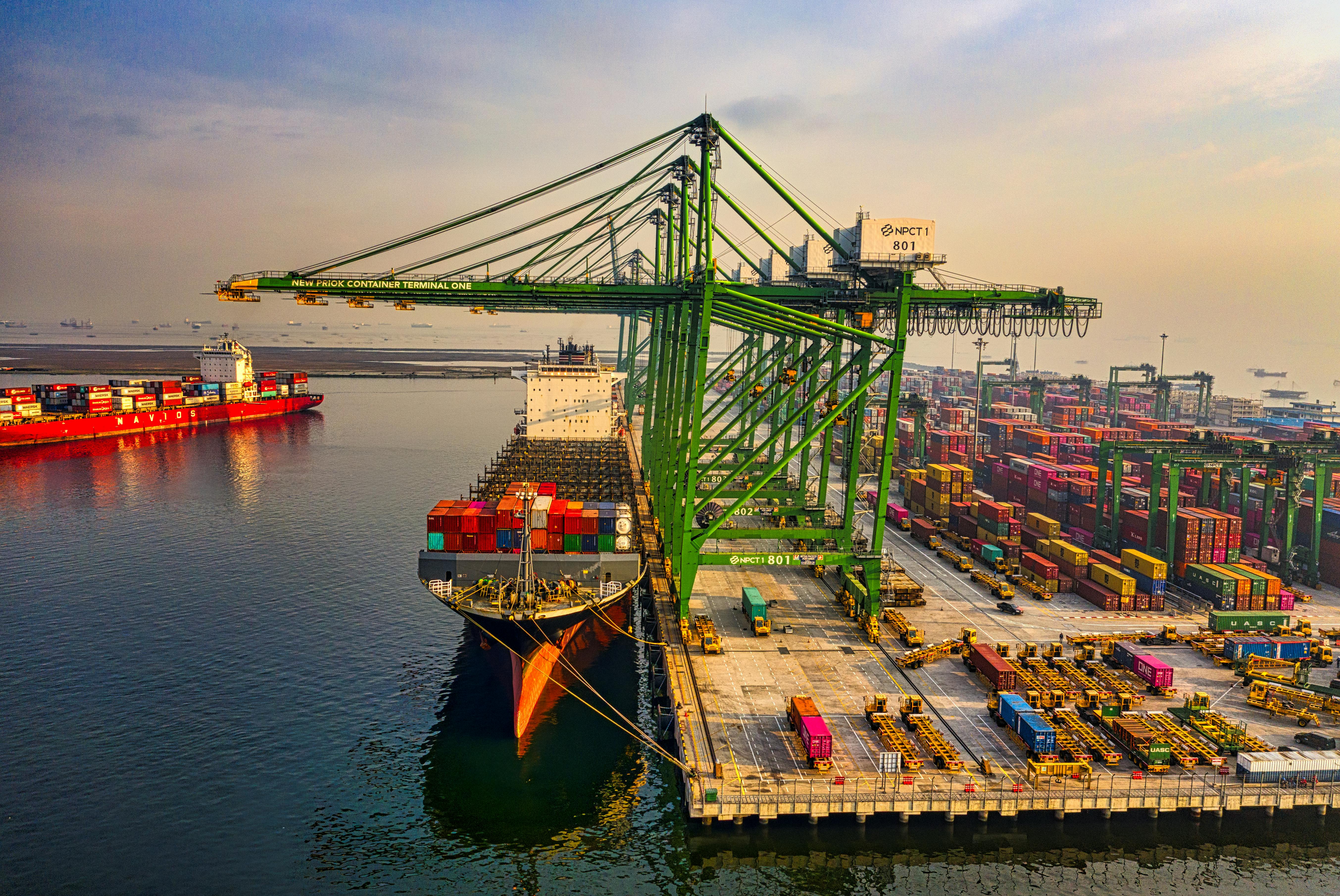
The new EU Ports Strategy rightly recognises that ports are no longer just logistics hubs – they are be...
Get our latest news