
Joint letter – ICC reform and expansion risks diverting ETS Revenues from real climate action
In light of the European Commission’s ongoing considerations to amend the ETS State Aid Guidelines, revising the rules for Indirec...
News

Publish date: November 20, 2025
News
Across Europe, the bioeconomy has become a cornerstone of the EU’s Green Transition. At its core, the bioeconomy focuses on the sustainable use of biological resources from land, forests, and oceans to produce food, materials, and energy.
A revised EU Bioeconomy Strategy, due on 25 November 2025, will seek to increase circularity across value chains, contribute to climate mitigation and adaptation, and reinforce the EU’s position in the global bioeconomy. This update comes at a time when EU policymaking faces increasing pressure to balance sustainability goals with economic competitiveness, energy security, and regulatory simplification.
The revision is driven by the need to scale up bio-based innovations and products, ensure the long-term competitiveness of the EU bioeconomy, secure a sustainable and resource-efficient biomass supply, and strengthen the EU’s role in the rapidly expanding global bioeconomy market.
The blue bioeconomy’s rising importance
Within this broader shift, the EU’s blue bioeconomy is gaining increasing strategic relevance. It focuses on the sustainable use of marine resources, from algae and shellfish to marine by-products and innovative biotechnologies that support food security, circularity, and climate resilience. Several recent initiatives reflect this growing attention, including the EU4Algae Initiative (2022), the Strategic Guidelines for a More Sustainable and Competitive Aquaculture (2021–2030), and the newly launched European Ocean Pact (2025). These efforts signal a recognition that Europe’s seas can contribute more to a sustainable, low-carbon bioeconomy.
Aquaculture can help meet rising protein demand while easing pressure on wild fisheries, support coastal economies, and provide low-carbon, nutrient-efficient biomass, especially through low-trophic aquaculture (LTA), such as macroalgae and shellfish. EU policy frameworks increasingly acknowledge this potential. The Common Fisheries Policy, the Marine Ecosystems Action Plan, Farm to Fork, and the EU’s aquaculture guidelines all highlight the need for sustainable growth, innovation, and climate-resilient practices.
Yet despite this promising foundation, significant gaps remain. Aquaculture does not receive the same visibility or policy prioritisation as land-based sectors in the bioeconomy. Public perception challenges particularly around environmental impacts continue to overshadow the strong sustainability profile of LTA. Fragmentation across EU institutions, differing national approaches, and limited data availability further slow coordinated development. As a result, Europe’s most climate-friendly marine biomass resources remain underused at a time when sustainable alternatives are urgently needed.
Production and value creation: EU vs. Norway
The EU aquaculture sector remains relatively small compared to global leaders. Spain, France, Greece, and Italy account for about two-thirds of EU production, mainly low-trophic species, with a total output of 1.1 million tons valued at €4.8 billion (Eurostat 2024/2025).
By contrast, Norway produced 1.6 million tons in 2023, primarily salmon, with an export value of €10 billion, making it the world’s second-largest exporter after China (Norwegian Seafood Council, 2024).
This comparison highlights both the growth potential for EU aquaculture and the challenges tied to market fragmentation, climate adaptation, environmental impacts, and regulatory alignment.
Looking ahead
The upcoming 2025 EU Bioeconomy Strategy presents an opportunity to strengthen the role of marine resources within Europe’s transition to a circular and climate-aligned economy. In a more politically complex landscape, the new Strategy will need to ensure that competitiveness and simplification do not come at the expense of environmental ambition or sound scientific foundations.
Of particular importance will be new measures to:
Such steps will be key for unlocking the blue bioeconomy’s potential while ensuring that Europe’s oceans remain healthy, productive and resilient.
In light of the European Commission’s ongoing considerations to amend the ETS State Aid Guidelines, revising the rules for Indirec...
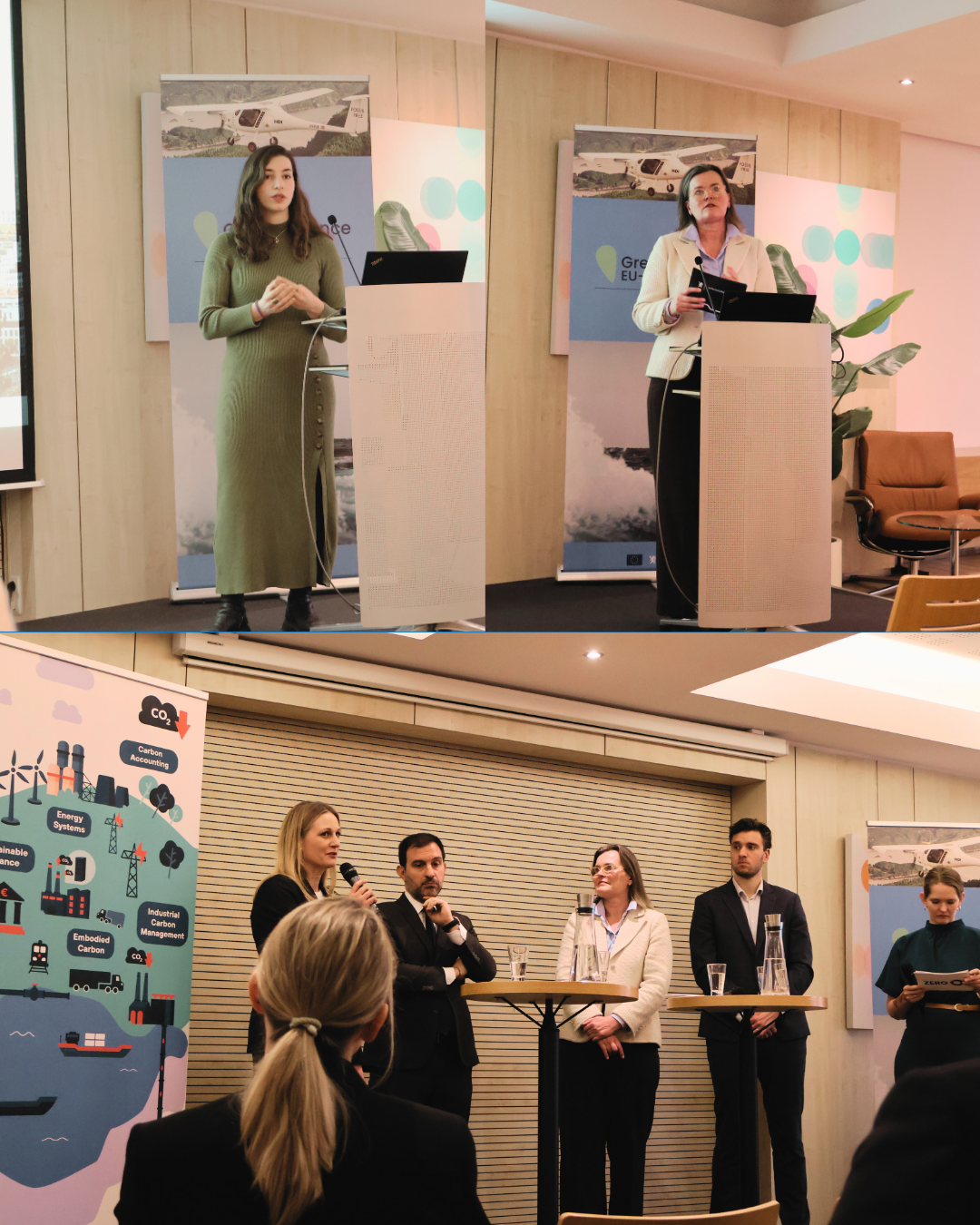
On 24 February 2025, Bellona Europa co-hosted a breakfast seminar at Norway House in Brussels alongside ZERO and the Mission of Norway to the EU, bringing together policymakers, manufacturers, and procurement practitioners around a single conviction: European cities hold a decisive and largely untapped lever for decarbonising construction. With the revision of the EU Public Procurement Directives on the horizon, the moment to use it is now.
Opening remarks and future of EU CRCF Market Christian Holzleitner, Head of Unit for Land Economy and Carbon Removals&nb...

Together with six NGOs and five industry partners, Bellona Europa signed a joint letter on the RFNBO Delegated Act, reiterating that now is not the t...
“The Commission shall monitor the situation at Union level with a view to monitoring the impact of the CBAM on the Union i...
Get our latest news