Joint Letter: Making Electrification the Engine of Europe’s Competitiveness and Security
Ahead of Thursday’s meeting of energy ministers, we and 16 other organisations from the EU Innovation Hub joined forces to call for ambitious renewab...
News
Publish date: October 30, 2026
News
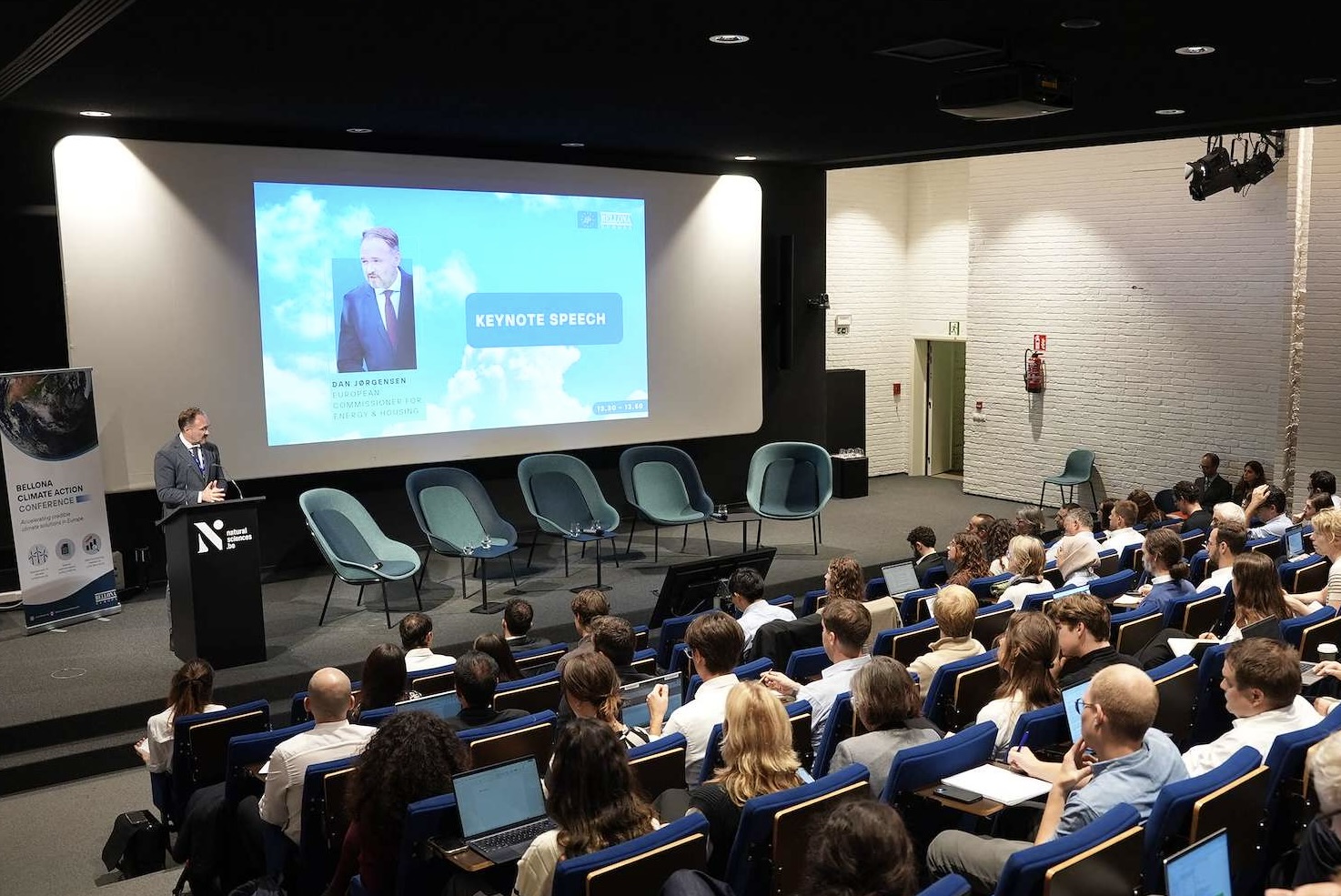
The third edition of the Bellona Europa Climate Action Conference took place on 1 October 2026, bringing together policymakers, industry representatives and civil society to address the critical question: ‘How can climate action drive competitive industrial transformation in a decade that demands both ambition and implementation?‘
Breaking down silos is essential for addressing complex, interconnected challenges. As Energy & Housing Commissioner Dan Jørgensen emphasised, creating a competitive, climate-neutral Europe hinges on close collaboration between the core pillars of our societies. Most importantly, Commissioner Jørgensen made a specific call for civil society to continue showing how the climate transition supports not only decarbonisation, but also other key EU objectives, such as strategic autonomy, affordability and competitiveness. Throughout the conference, speakers explored the policies required to deliver Europe’s climate transition, from accelerating electrification and protecting natural carbon sinks to building effective clean energy markets, and expanding the infrastructure needed for a climate-neutral economy. This article outlines the key discussions and takeaways of the Conference.
Our first panel focused on the EU Emissions Trading System, which has been Europe’s main tool for reducing emissions for over two decades and is currently undergoing review. The Commission put forward its proposal in July 2026; the Parliament’s rapporteur presented his draft report in October, and co-legislators are aiming for a deal by early 2027.
The choices made now will decide how fast the emissions cap declines and European industry decarbonises, how carbon credits and removals are handled and how ETS revenues are spent, among other aspects. On these will largely depend on whether Europe will achieve, or not, its 90% net emissions reduction target by 2040.
The panellists discussed not only the importance of maintaining an ambitious ETS for both European industry and its citizens, but also the disastrous consequences that a weaker ETS would entail for European competitiveness and strategic resilience.
Biomass is a limited resource. Food, energy, materials, carbon removals and biodiversity gains are increasingly competing for the same hectare of land. The bioeconomy may well play a role in defossilising Europe’s economy, but it comes with its own challenges. That was the starting point of a panel on the bioeconomy’s role in the EU’s post-2030 climate framework, which opened with a short presentation from Dr Louis Hennequin, Bellona Europa’s Carbon Accounting Research Manager.
Louis set out the underlying core arguments. First, biomass availability is not stable: the EU’s land carbon sink has already declined by roughly 30% over the past decade, even as demand for bioenergy, biomaterials and carbon removals keeps growing. Second, even where sustainable biomass does exist, it rarely reaches its highest-value use: cascading use is largely market-driven rather than value-driven. Third, and most fundamentally, the applicable frameworks, e.g. RED’s bioenergy rules, CRCF, LULUCF, the EU Bioeconomy Strategy, were built separately and at different times, and are only now being forced to work together under post-2030 pressure. Reversing the sink’s decline now is not a side issue: it is the precondition for the removals and biomass volumes the rest of the framework assumes it can deliver later.
The panel discussion that followed largely confirmed that starting point, with each speaker adding a different layer. Nelly Azaïs of Agora argued plainly for using less biomass and lowering forest harvest levels, rather than assuming better allocation alone can resolve the supply pressure. Barbara Smailagić of the European Commission’s DG ENV reinforced the cascading principle as the right organising idea: bioenergy should only be the outcome where no higher-value use exists, while implicitly acknowledging that principle still lacks real teeth in practice. MEP Michal Wiezik grounded the discussion in physical reality, describing forests already under compounding pressure from fires, water scarcity and biodiversity loss, pressure that constrains how much can sustainably be harvested regardless of how policy is designed. Valeria Forlin of DG CLIMA brought in the removals dimension, noting that CRCF methodology for forest management is being developed, and the Commission is working on the claims and use-cases of CRCF credits. DG Clima should deliver the national targets package by the end of this year, including the updated LULUCF regulation, which will fall under an economy-wide target.
Europe’s industry needs to electrify to decarbonise and ensure competitiveness, which depends on deploying energy infrastructure quickly and ensuring that electricity remains affordable. Our energy panel gathered three complementary perspectives to discuss the obstacles for electrification: a power utility investing in renewable generation and grids (Iberdrola), an industry association promoting grid enhacing technologies (CurrENT), and a civil-society organisation working to accelerate clean energy (the Clean Air Task Force (CATF)).
The discussion first addressed the obstacles preventing Europe from producing and delivering the clean electricity required by industry. Iberdrola noted that regulatory stability is needed to mobilise capital and execute on existing grid expansion plans. CurrENT highlighted that additional capacity does not always require new lines: grid enhancing technologies can increase the capacity, efficiency and flexibility of existing networks. However, their deployment is often slowed by regulatory incentives that favour conventional infrastructure. The second part of the discussion focused on planning. Since grids and other energy infrastructure can take many years to permit and build, it is pivotal that investment decisions are based on accurate forecasts of future demand. Panellists discussed how the Grids Package’s proposed EU Central Scenario could strengthen coordinated planning. CATF called for greater modelling transparency to enable stakeholder scrutiny and constructive feedback. CurrENT stressed that grid operators should assess technologies such as dynamic line rating, advanced conductors and power-flow control before defaulting to conventional expansion. The final part of the panel addressed financing and affordability. Panellists exchanged views on how to fund the investment Europe’s grids need. A key point of discussion was whether remuneration models should go beyond rewarding only new infrastructure, and incentivise better use of the existing grid.
Public procurement accounts for around 15% of EU GDP, yet this spending has not sent a strong market signal supporting low-carbon European markets, which provide assurances to the European market that public buyers are looking to close the green premium while increasing European autonomy.
In our fireside chat with Lise Carlsen, a national expert at DG GROW and one of the minds behind the Green Public Procurement (GPP) chapter of the recent European Commission’s proposal for the Public Procurement Regulation, we explored the proposal’s goals.
Legal uncertainty and procedural rigidity in the current public procurement framework made public buyers risk-averse, limiting the uptake of strategic and green public procurement, already allowed by the Public Procurement Directive. To encourage public buyers to buy more sustainably, the Commission is pursuing two strategies. One is simplifying the rules. According to the Commission, the guidance on how to purchase green, coupled with reduced administrative burden, will support the uptake of GPP in Europe.
The second measure makes the Best-Price-Quality-Ratio (BPQR) award method mandatory. The proposal gives a broad definition of quality, including delivery conditions, accessibility, and technical assistance. Environmental NGOs worry that, despite BPQR now being mandatory, little will change on the ground for strategic – and green – public procurement, especially given their optional character.
In the Commission’s view, however, the Public Procurement Regulation is an overarching instrument. Strategic procurement may not suit every sector or every purchase. This is why the proposal aims to give public buyers significant flexibility, while also clarifying what strategic and green public procurement entails in the dedicated chapters.
Finally, what will happen to the existing mandatory GPP in national legislation if this regulation is adopted? During the panel, the Commission reassured that the proposal aims to set a common baseline, not to tap into any Member State’s ambitious GPP rules. However, legal clarity is essential, and without explicit written empowerments in the GPP chapter, Bellona Europa fears Member States will face both a floor and a ceiling on how to use public procurement to drive industry decarbonisation.
The final session of the Bellona Annual Climate Action Conference involved a presentation by Tom Mikunda, Senior Policy Adviser at Bellona Europa, on the European Commission’s anticipated proposal for a regulatory framework for CO₂ transport and storage infrastructure. Such a framework is essential to develop an internal market for CO2 and offer heavy industry a viable pathway to decarbonise while maintaining production in Europe. Tom stressed the importance of establishing a transparent and harmonised framework governing the relationship between emitters that require CCS to decarbonise and providers of CO₂ transport and storage services. He noted that most planned CCS projects are currently emerging within a regulatory vacuum, resulting in protracted contractual negotiations as developers navigate the relative novelty of third-party access arrangements.
Tom also highlighted the divergent approaches to regulating CO₂ transport infrastructure emerging across Europe. While the Flemish Region of Belgium is pursuing a more stringent approach to economic regulation, Denmark is adopting a more market-based model with enhanced regulatory oversight. Many other Member States have yet to give the issue sufficient attention. These differences risk creating a fragmented regulatory landscape across the European Union, reinforcing the case for an EU-level framework, with the Commission’s proposal now expected in the first quarter of 2027.
Through the conference, one message came through: Europe has tools to align climate ambition with industrial competitiveness and affordability, but the outcome depends on how they are used. A strong ETS, a cautious approach to biomass and land-use, grids that deliver electrification, public procurement that rewards low-carbon products and fair rules on CO2 infrastructure all depend on decisions now in the hands of EU co-legislators and Member States. As Commissioner Jørgensen reminded the room, keeping decarbonisation at the centre of the competitiveness agenda is a shared task. Civil society, industry and policymakers must keep working together. Meanwhile, Bellona Europa will continue to do its best to pull the conversation towards effective climate action.
Ahead of Thursday’s meeting of energy ministers, we and 16 other organisations from the EU Innovation Hub joined forces to call for ambitious renewab...
This year, the European Commission has committed €3.4 billion in grants from the Innovation Fund. Financed through revenues from the EU’s Emission Tr...
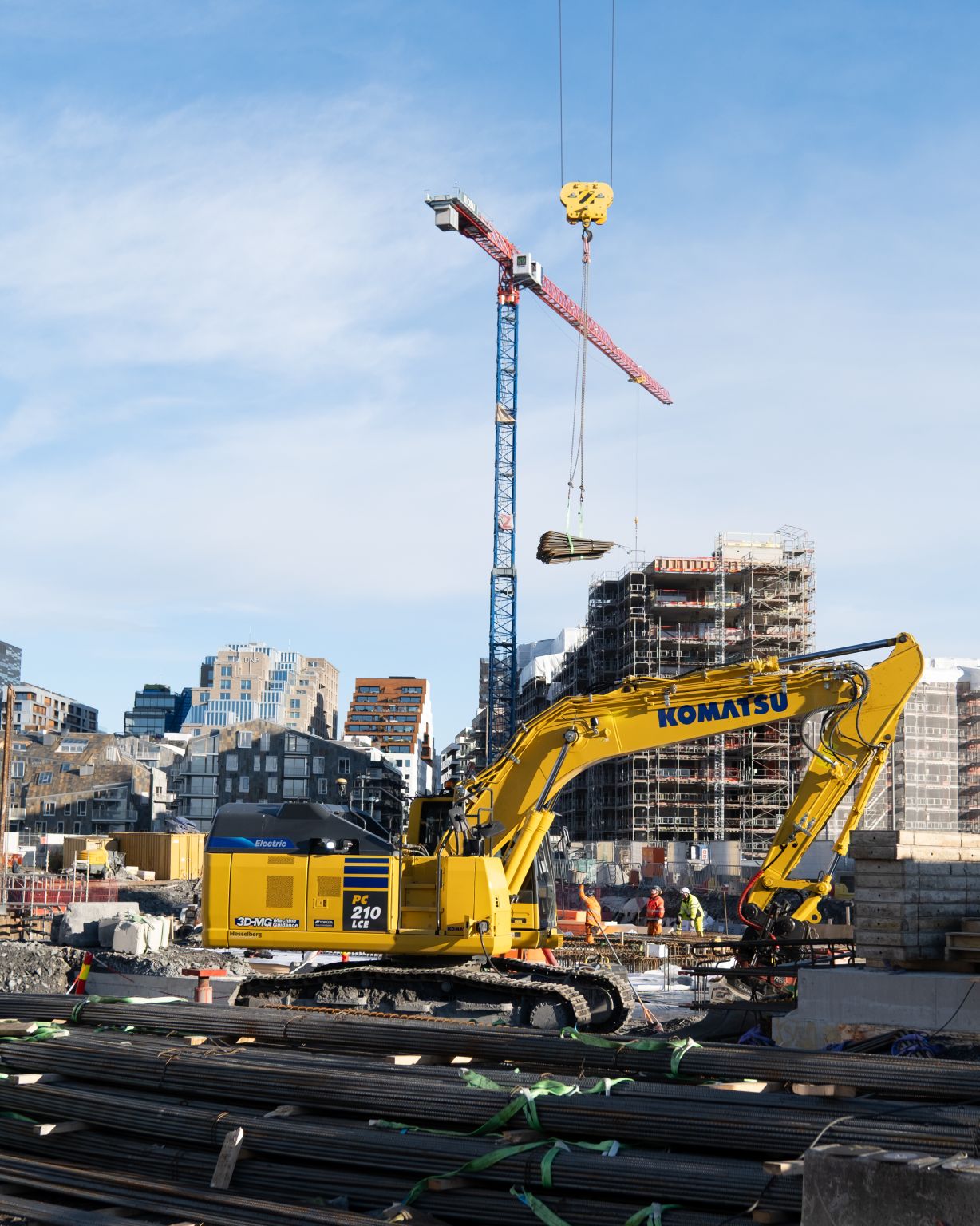
By Linda Zarai, Policy Advisor, Clean Construction On September 23, Oslo City Council adopted a local resolution that extends the zero-emission co...

Wednesday, October 21, 2026 – Brussels, Belgium The European Union has published its new Arctic Strategy, and it is good news for the climate. One...
Get our latest news