The United Nation’s COP30 global climate negotiations in Belém, Brazil ended this weekend with a watered-down resolution that failed to halt deforestation and made no direct mention of fossil fuels, long known to be the main driver of global warming.
The final statement, criticised across the board by diplomats as insufficient, represented a victory for oil producers like Saudi Arabia and Russia. The document included numerous warnings about the cost of inaction but gave few provisions about how the world might address dangerously rising temperatures head on.
While the statement – pushed through by the Brazilian presidency in overtime after two weeks of contentious negotiations – did include language around boosting finance for poor nations coping with global warming, it nonetheless exposed deep rifts over how future climate action should be pursued.
“The outcome from Belém represents a weak consensus, which does not match scientific reality,” said Frederic Hauge, founder of Bellona, which has maintained an active presence at the UN climate talks for the past three decades.
Closing the ‘ambition gap’
The Brazilian presidency of the Belém talks had sought to paint this installment of the annual gathering, hosted at the mouth of the Amazon River, as the “COP of Truth” aimed at addressing the so-called “ambition gap” between what science tells us we need to do to arrest rising temperatures and what the world’s nations have committed to do toward this end.
As talks opened, ambitions were muted – but hope emerged late in the discussions around the creation of a roadmap away from fossil fuels and deforestation.
But vociferous opposition emerged from oil producing nations like Saudi Arabia, which argued against its biggest export being singled out. It was joined by many African and Asian countries that argued – as they have in earlier talks – that Western countries bear unique responsibility in paying for climate change because they are historically responsible for the most greenhouse gas emissions.
Around 80 countries, or a little under half of those present, demanded a concrete plan to move away from fossil fuels. But aside from Europe, those backing that demand did not include any of the world’s major economies.
COP30 eludes its defining legacy
Bellona’s team, attending its 30th year of climate negotiations, asserted that the outcome in Belém failed to recognise the ambition gap, which would have highlighted the invaluable work of the International Panel on Climate Change, the UN body whose work has illustrated the scientific consensus about climate change and its causes.
The COP 30 thus failed to deliver on what could have been its defining legacy – a clear roadmap towards transitioning away from fossil fuels and a credible plan to halt deforestation, said Bellona.
“Leaving Belém without any substantive follow-up on how to plug the ambition gap between science and existing commitments, and without a plan to halt deforestation or to transition away from fossil fuels represents a deeply disappointing outcome which raises serious doubts about our collective ability to rise up to the climate challenge,” said Bellona Europa’s Head of Carbon Accounting, Mark Preston Aragonès.
Leaving the world hostage to petrostates
Further adding to the atmosphere of disappointment was the absence of any official negotiating team from the United States, the world’s second biggest greenhouse gas emitter, behind only China. The US government under President Donal Trump boycotted the talks, eschewing multilateral climate action on the world stage, while at home it simultaneously revs up the American fossil fuel industry and repeals federal support for renewable energy and electric vehicles. It was the first time in the 30-year history of climate talks that the United States was absent. Yet the talks continued with broad global participation, underscoring that multilateralism remains resilient even without the US.
That could have had consequences in Belém. While the American government, even under Democratic administrations, has hardly been known for ambitious climate action, it has nonetheless brought its weight to bear in negotiations with other high emitting economies at the talks, like China and Saudi Arabia, insisting they take on more responsibility. That lack of pressure could have emboldened the big emitters present at Belém – and left other big negotiators like Europe at lose ends.
“The EU’s internal struggles, the absence of the US, and China’s passive climate diplomacy, have emboldened Saudi Arabia and other petrostates to hold the world hostage,” said Aragonès.
“While the EU made strong statements in defense of mitigation, it dragged its feet on items important to developing countries, such as climate finance and adaptation. However, it was naïve in allowing the Arab Group to yet again control the pace of progress,” he added.
Coalition emerges as the great hope of COP30
The scattered outcome of the talks, said Bellona’s Hauge and Aragonès, made it all the more critical for nations to stay the course on their own domestic actions on reaching climate goals and seek their own coalitions – perhaps even outside the UN climate process – to make progress where the world, as a whole, perhaps cannot.
It was, in fact, at events on the sidelines of the Belém conference where the most welcome developments occurred. Notably, the Action Agenda has shown that where coalitions have been willing to work together, progress can be made in improving our ability to address the climate crisis, by building on the ambition floor that COP provides.
“Coalitions of the willing, such as the Climate and Clean Air Coalition, must be additional to this weak consensus, such that we can go beyond and develop solutions to the climate crisis. The climate crisis will not wait for us to catch up,” Bellona Founder Hauge said.
“Domestically, the EU and Norway will need to stay the course in pursuing an ambitious climate agenda which lives up to the science while retaining and decarbonising its industrial base,” Hauge added.
With this in mind, the importance of robust carbon pricing applied both domestically via the EU ETS and internationally via the Carbon Border Adjustment Mechanism must be emphasised, Aragonès said.
Bellona side events
Aragonès was joined in Belém by Bellona Europa Executive Director Jonas Helseth, Bellona CEO Nina Hjellegjerde, and Mats Rongved, a Carbon Capture and Storage advisor from Bellona’s Oslo headquarters, all of whom were present for all two weeks of the summit. Participating in a raft of COP side events, Bellona staff continued to forge partnerships with governments actor and other experts in the area of carbon capture and storage, electrification, clean industry, and stemming the flow of environmental disinformation.
Monday, November 10: Role of Cities for CDR: At COP30 in Belém, Executive Director Jonas M. Helseth joined the first City CDR Initiative event to highlight how strong multi-level governance can accelerate carbon dioxide removal (CDR) and embed it into effective climate action. He stressed that permanent CDR is essential for driving deeper emissions cuts, balancing unavoidable emissions, and sustaining net-negative pathways. Clear roles for CDR across city and national strategies are needed, alongside recognition of its wider co-benefits, from greener urban spaces to better water management and biodiversity. Cities have especially high potential but lack a dedicated platform for collaboration, making initiatives like CityCDR crucial for connecting local leaders, showcasing projects, and building community support.
Tuesday, November 11: How Disinformation Derails Climate Action: President Lula opened COP30 by declaring it the “COP of Truth,” marking the first time information integrity is formally included in the UNFCCC Action Agenda. Bellona Foundation CEO Nina Hjellegjerde attended the event, where she joined the panel “Real Business: Sabotaging the Shift – How Disinformation Derails Climate Action and a Just Transition.” The discussion focused on how AI-driven disinformation and selective data are distorting climate narratives and obstructing a fair and transparent green transition.
The key message: disinformation is the new pollution, it corrodes trust, distorts public debate, and weakens the basis for evidence-based climate action. Facts and trust are climate infrastructure, essential for building and maintaining public support.
A strong, fact-based public sphere is not a side issue; it’s central to effective climate action. Thanks to the panelists and Hydro for a sharp and timely conversation.
Friday, November 14: Aragonès a Panelist at the Super-Pollutant Solutions Pavilion at COP30:
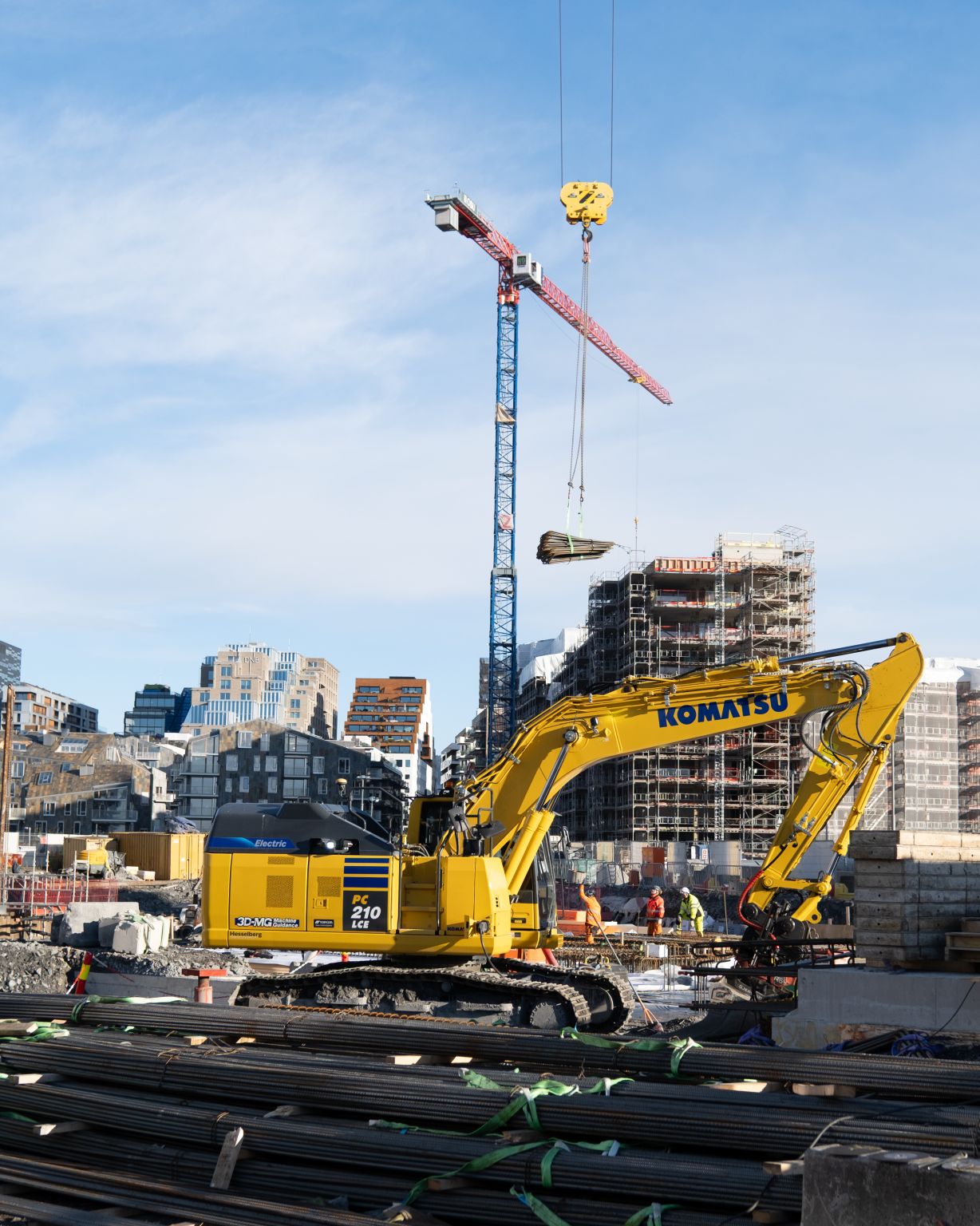
At the Super Pollutant Solutions Pavilion at COP30 in Belém, Norway’s Climate and Environment Minister Andreas Bjelland Eriksen launched a new global initiative for clean, zero-emission non-road machinery, an effort Bellona has advocated for nearly a decade. Bellona’s Head of Carbon Accounting, Mark Preston Aragonès, underlined the major climate benefits of electrifying non-road machinery, from reducing emissions and air pollution to cutting noise and lowering fossil-fuel dependence.
Mark stressed the importance of clear long-term policies to phase out conventional machinery, the role of public procurement in driving market change, and innovative solutions for managing electricity supply to large machinery fleets. The new initiative marks a significant step toward cleaner construction and industrial activity, with Bellona continuing to support the transition through expertise and research.
Saturday, November 15: What Is the Role of Non-State Actors in Delivering CCS, Especially in LATAM Countries?:
At COP30 in Brazil, Executive Director Jonas M. Helseth spoke at the official UNFCCC side event “What Is the Role of Non-State Actors in Delivering CCS, Especially in LATAM Countries?” co-organised by Bellona Europa, the Carbon Capture and Storage Association, the University of Texas at Austin, the International CCS Knowledge Centre, and IEAGHG.
Key takeaways included the growing maturity and global scope of the CCS debate, the lessons from Europe where petroleum companies long dominated discussions without prioritising CO₂ storage, and Bellona’s long-standing view of CCS as a license to operate. Helseth highlighted the EU’s recent move to legally require petroleum companies to deliver 50 Mt of CO₂ storage by 2030 to support industrial decarbonisation, now facing predictable legal pushback from the oil and gas sector. The message: society must take ownership of the CCS conversation to ensure real climate progress.
Wednesday, November 19: “Paving the Way for a Regenerative Economy: CDR and Prosperity Beyond Net-Zero”
Speaking on behalf of CityCDR and the UNFCCC Climate Champions, Mark highlighted the critical role cities can play in advancing carbon removal, at Global CDR Initiative’s event He emphasised the need to integrate CDR into long-term urban planning, the potential for cities to become local “carbon sinks,” and the importance of aligning CDR with emissions reductions to strengthen climate adaptation and resilience. (link to recording: https://www.youtube.com/watch?v=zdsA0PW2pD0 )
Thursday, November 20: Forging Consensus: The Path to a Global Green Steel Standard:
The event organised by Solutions for our Climate explored the value and the challenges of aligning methodologies and standards to label steel products. Mark highlighted that many methodological choices exist in how to identify and allocate emissions and the certain choices are likely to be made which will benefit incumbents within each geography. In spite of these differences, some form of mutual recognition could be vital to support alignment while accommodating these choices.