Event
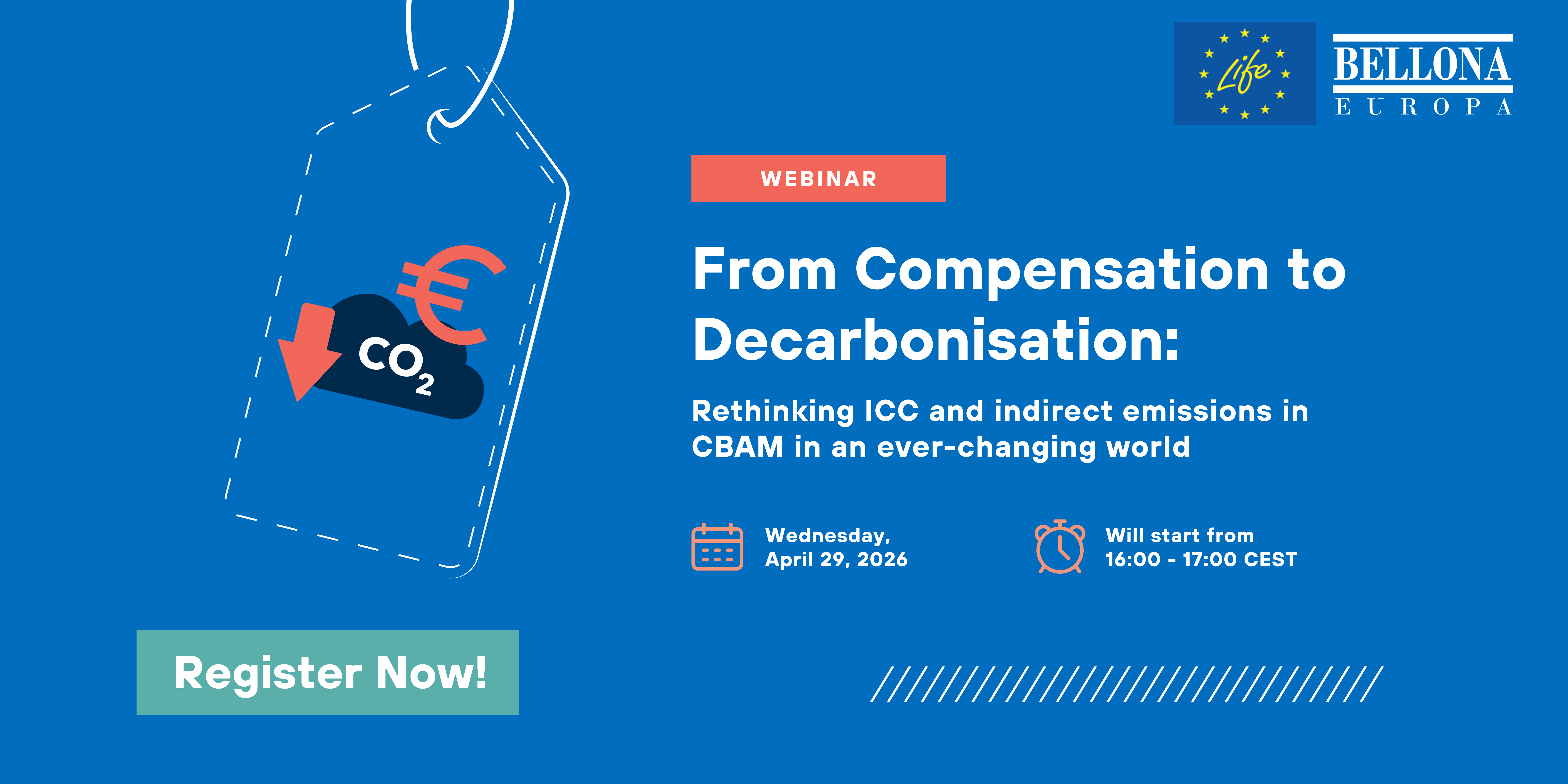
From compensation to decarbonisation: rethinking ICC and indirect emissions in CBAM in an ever-changing world
Time and place
April 29, 2026
16:00 - 17:00
Online
Event
From compensation to decarbonisation: rethinking ICC and indirect emissions in CBAM in an ever-changing world
Amid growing geopolitical uncertainty and the risk of renewed energy price volatility, the EU faces a pressing challenge: strengthening industrial competitiveness while accelerating decarbonisation. Recent crises have highlighted the risks of fossil fuel dependency, reinforcing the need to scale up renewable energy as the foundation of Europe’s energy security and strategic autonomy. In this context, carbon pricing instruments such as the EU Emission Trading System (EU ETS) and the Carbon Border Adjustment Mechanism (CBAM) are key, but important design gaps remain.
One of these gaps is the current exclusion of indirect emissions from the CBAM. This issue will be critical in the upcoming CBAM review. Progress has been limited due to the perceived incompatibility with Indirect Cost Compensation (ICC), which Member States use to support energy-intensive industries facing electricity-related carbon costs. To address this, Bellona has developed a proposal outlining how indirect emissions can be included in the CBAM while maintaining targeted and effective compensation mechanisms.
This webinar will present Bellona’s approach and open a discussion with representatives from civil society and industry on its implications and feasibility. It will explore why addressing indirect emissions is necessary, how ICC can be reformed to remain compatible, and what this means for industrial decarbonisation, energy prices, and investment signals. The discussion aims to contribute to the policy debate ahead of the CBAM review by identifying practical pathways for implementation in the current economic and geopolitical context.
Speakers
- Heidi Peltonen, Vice President Sustainability, Outokumpu
- Camille Maury, Senior Policy Officer in the Climate and Energy team, WWF European Policy Office (EPO)
- Francesco Lombardi Stocchetti, Policy Advisor, Sustainable Finance & Economy, Bellona Europa
🎤 Moderated by: Andrea Spignoli, Policy Manager, Sustainable Markets, Bellona Europa