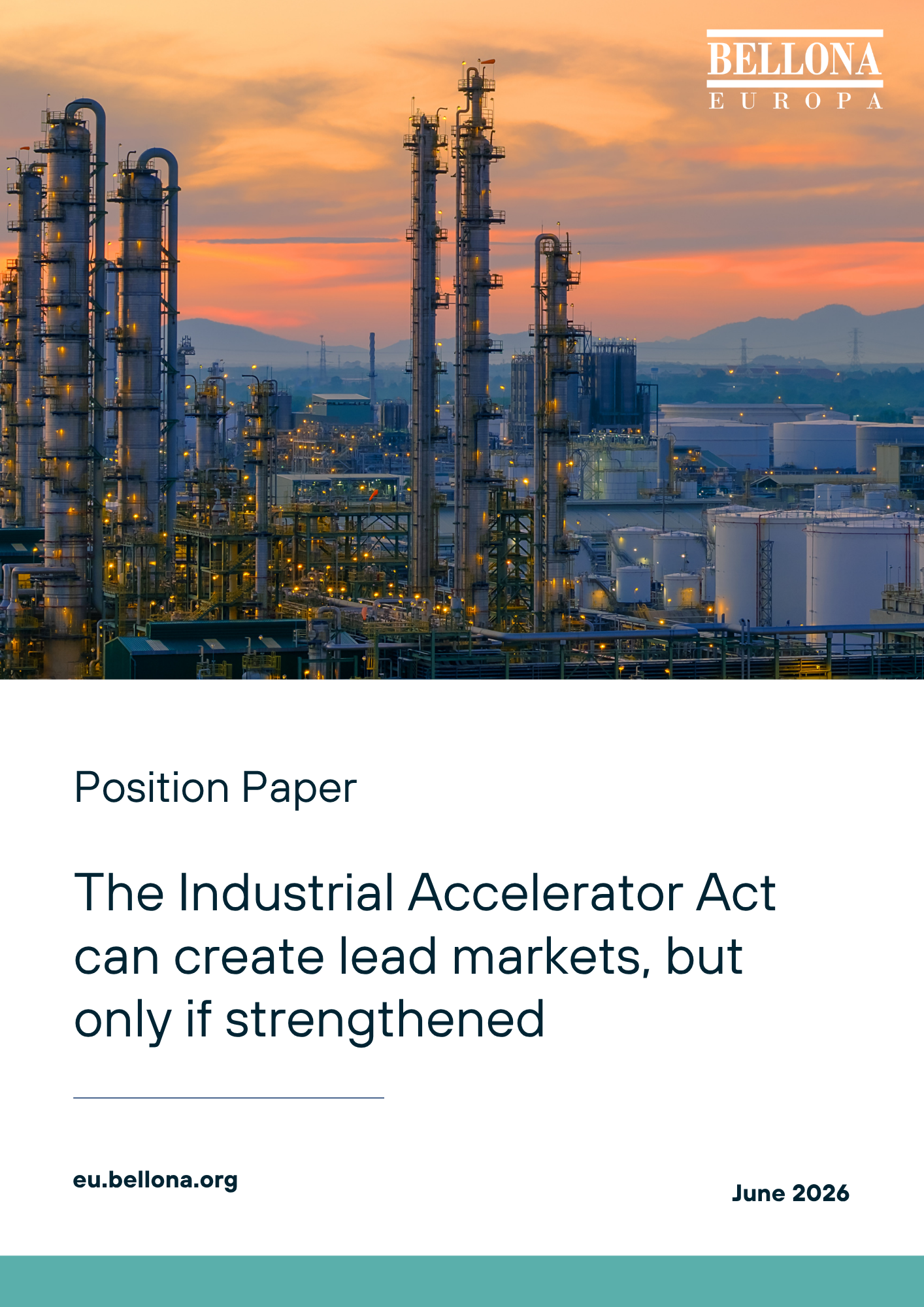
The Industrial Accelerator Act can create lead markets, but only if strengthened
The Industrial Accelerator Act (IAA) is a welcome and necessary step. But decarbonising Europe’s most emissions-intensive industries – steel, cem...
Publication
Publication
One of the main challenges of decarbonising industrial production is finding ways to finance the transition while keeping the industry itself competitive. In this regard, the existing and proposed tools can be divided into supply-side and demand-side initiatives: supply-side initiatives push companies to decarbonise their production, while demand-side initiatives are aimed at creating the demand for such low-carbon products. Supply-side initiatives require compliance from producers, while demand-side initiatives help creating a customer based and the business case for low-carbon products, providing long-term market predictability to producers.
The trade of Greenhouse Gas (GHG) reduction certificates using a Book & Claim (B&C) model is one of the proposed tools to boost demand for low-carbon products. It also helps supply and demand meet virtually if it cannot be met physically, especially for local products such as cement and concrete for which long-distance transport is deemed infeasible due to the high transport costs and emissions compared to the value and low carbon nature of the product. As a result, it is useful for producers with costly decarbonisation investments to find customers willing to pay the higher price associated with lower-carbon products, commonly referred to as the green premium.
Read more in our position paper
Get our latest news