Article 23 on Trial: How Oil and Gas Producers Are Challenging the EU’s CO₂ Storage Obligations
Fifteen legal cases brought by oil and gas producers are challenging a key provision of the EU’s Net-Zero Industry Act, putting Europe’s 2030 CO₂ sto...
Publication
Publication
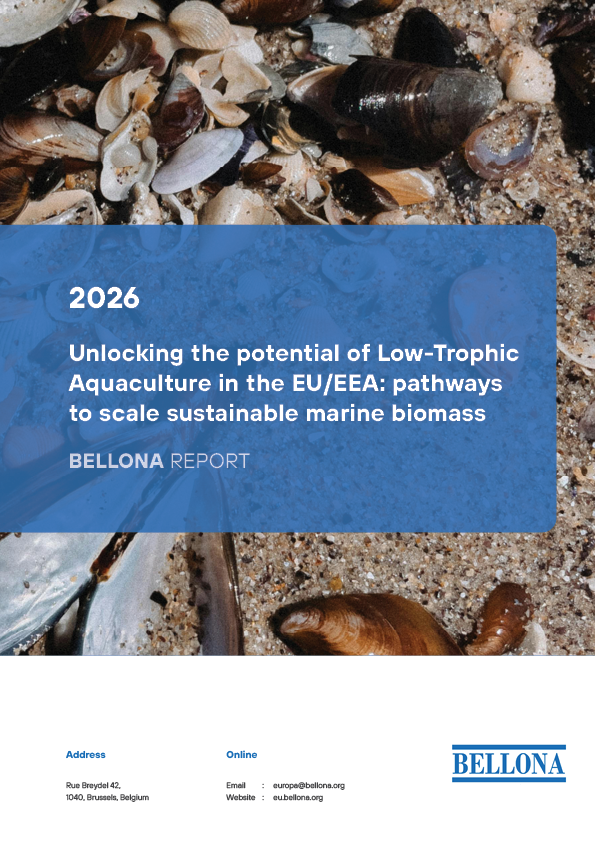
Low-Trophic Aquaculture (LTA) focuses on the cultivation of species such as seaweeds and bivalves and represents a fundamental cornerstone for a future European bioeconomy. Unlike conventional high-trophic aquaculture systems that rely on external feeds and contribute to resource depletion, LTA leverages the ocean’s natural processes to produce biomass without the need for additional inputs. By providing critical ecosystem services, LTA functions as a powerful tool with the potential for contributing to climate mitigation, nature restoration and a base for future biotechnological industries across Europe, directly aligning with the Bioeconomy Strategy objectives.
Despite these compelling benefits, the European LTA sector remains a niche industry hampered by regulatory fragmentation, underdeveloped processing infrastructure, and market immaturity. Current obstacles, such as competition for coastal space and fragmented bureaucracy, prevents the sector from achieving the industrial scale necessary to impact global markets. To unlock its full potential, Europe must move beyond small-scale pilots toward strategic offshore co-location (e.g., within wind farms) and the development of regional biorefining hubs. By harmonising policy frameworks and de-risking investments, the EU can transition from a nutrient-input monoculture model to a circular, low-carbon marine-based bioeconomy, repositioning European aquaculture as a catalyst for further environmental and economic sustainability.
Get our latest news