
Joint letter – ICC reform and expansion risks diverting ETS Revenues from real climate action
In light of the European Commission’s ongoing considerations to amend the ETS State Aid Guidelines, revising the rules for Indirec...
News

Publish date: August 7, 2025
News
Preamble
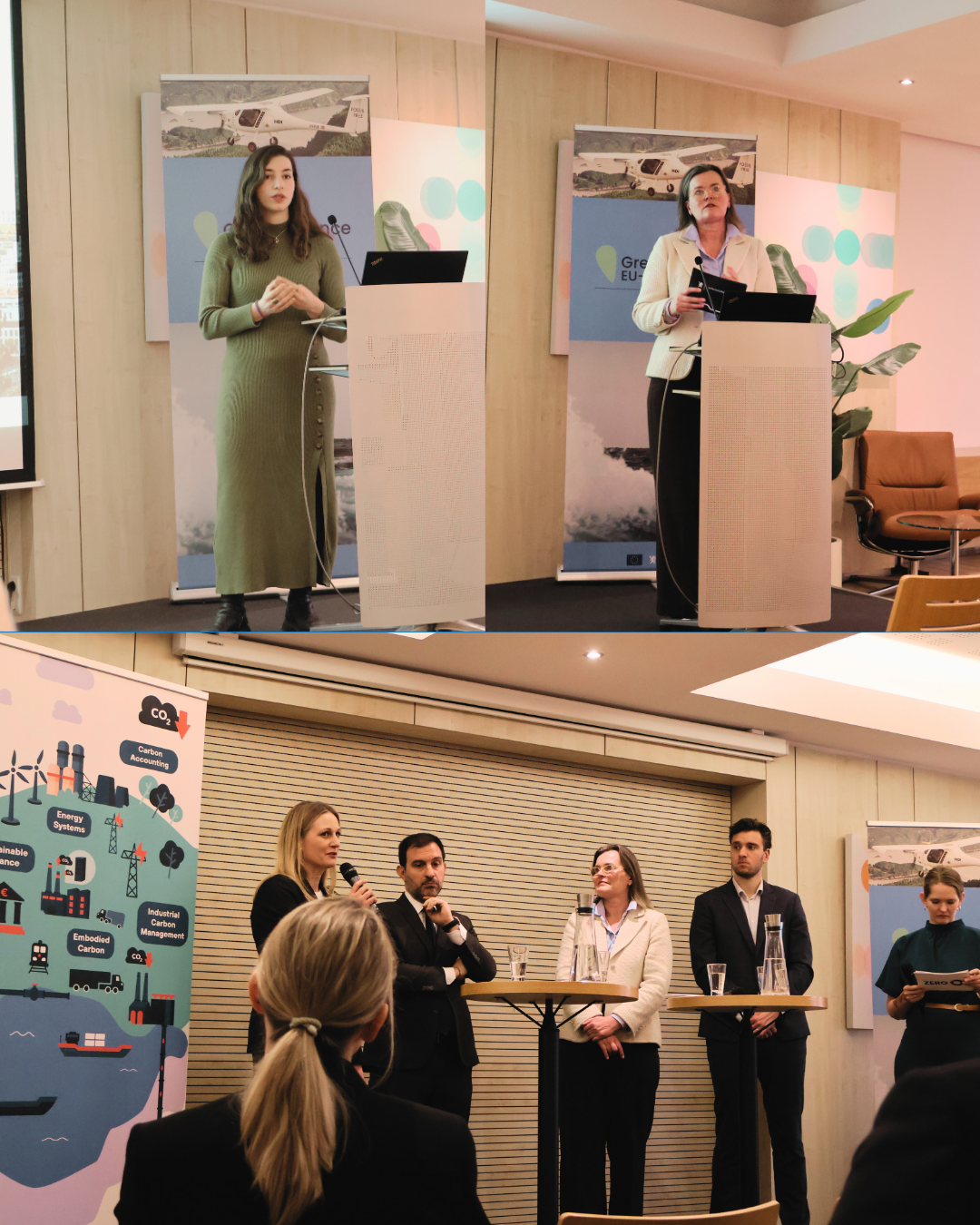
This article was written to reflect the discussions that took place at the event “EU Carbon Pathways: Unlocking the European CCS Market for a Competitive Net-Zero Industry”, organised and hosted by Bellona Europa in collaboration with CCS Europe, on June 4th, 2025. The event brought together policymakers, industry leaders, academia and civil society to explore the challenges and opportunities associated with CO₂ market development in Europe, and to present recommendations for the way forward.
In addition, the article reflects Bellona’s work on industrial decarbonisation, especially in the context of the upcoming EU CO₂ transport market regulation on which Bellona is currently conducting a survey of industrial emitters as well as prospective CO2 transport and storage operators.
Nearly all climate change modelling scenarios highlight that Carbon Capture and Storage (CCS) will play a role in reaching climate neutrality at both the EU and global levels. EU projections show a need to capture 280 million tonnes of CO₂ per year by 2040 to meet the Union’s climate goals and deliver on the Paris Agreement. CCS technologies are necessary to decarbonise harder-to-abate industries, such as cement, lime, waste incineration, paper and pulp, iron and steel, where process emissions will still need to be captured even after electrification and fuel switching to achieve net-zero[1]. Decarbonisation through direct electrification, efficiency improvements, demand reduction and substitution should always precede the use of CCS where technically and economically feasible.
CCS technologies have existed and been in use for decades, particularly in countries like Norway, with deployment steadily expanding across EU Member States, especially in the North-West. The EU has also established a legal framework for geological storage of CO₂ through its CO₂ Storage Directive. The EU Emissions Trading Scheme (ETS), meanwhile, provides an incentive for rapid decarbonisation, making it more cost-effective to capture any process CO₂ instead of letting it reach the atmosphere.
Given all these elements, why have we not seen a market for the flow of CO₂ to storage materialise? We believe that it is the result of persistent market failures at various levels across the CCS value chain. These failures actively prevent the market’s establishment and must therefore be understood and addressed to allow for rapid and large-scale deployment of CCS technologies in the EU. This is the first of a series of Birefs and publications from Bellona Europa delving into these market failures and possible solutions.
1/ What should a CO₂ market look like?
A functioning CO₂ market is one that allows for the flow of CO₂ from emitter to storage site in a fair and transparent manner. Therein lies the challenge: the stored CO₂ has no inherent economic value outside of avoiding paying for emissions under the EU ETS. Unfortunately, numerous barriers remain that prevent such a market from developing in the first place, let alone operating at scale. These range from natural monopolies to market fragmentation and challenges associated with the public good characteristics of CCS and accompanying infrastructure, as outlined in the visual below.

Although this is not an exhaustive list, a well-functioning market for CO₂ will not materialise unless most, if not all, of these challenges are addressed – especially given their interconnected nature. It is the role of public authorities to implement policies that remove barriers and create incentives for private actors to enter and develop this market. Both national and EU policies will be needed, including regulatory frameworks, financial and non-financial support mechanisms, cross-chain and cross-border harmonisation and more.
Though they have their own characteristics, CO₂ markets are not entirely unique or new. The support of capital-intensive infrastructure markets with a public good characteristic has frequently been a part of public spending and regulatory reform, with different degrees of support warranted. Solutions to the challenges mentioned above therefore exist. Some have even been applied at Member State or project level already and could be extended to the rest of the Union. Applying the right solutions, however, requires a better understanding of each specific market failure and how to correct it.
In this article we will be addressing the market failures of complementary markets, cross-chain risk, coordination failure, market fragmentation and information asymmetry. These topics were discussed at the event “EU Carbon Pathways: Unlocking the European CCS Market for a Competitive Net-Zero Industry”, organised and hosted by Bellona Europa in collaboration with CCS Europe, on June 4th, 2025.
2/ First mover disadvantage
One of the challenges most often cited by the stakeholders along the CCS value chain is that of complementarity between the different parts of the value chain. This is the so-called chicken and egg paradox. CCS projects are complex, cross-disciplinary endeavours with lengthy value chains. They depend on many different components becoming operational at the same time. This point was raised by the director of CCS Europe, Bergur Løkke Rasmussen, at the Bellona event. He highlighted the need for a business case to justify the massive investments to launch CO₂ capture projects for industry. Also crucial, mentioned Løkke Rasmussen, is the certainty of available storage sites and transportation means.
In addition to uncertainty of development across the value chain being a barrier for investment, the complementary nature of CO₂ markets creates a risk of desynchronisation between its different components, which could lead to infrastructure bottlenecks. This could happen, if, for instance, CO₂ capture is developed ahead of transport or storage and part of the ensuing demand is unmet. A well-functioning market requires matching supply and demand to ensure financial viability for the CCS value chain and its different components. It is particularly important to avoid assets becoming stranded, meaning that their revenue falls so low as to become unmanageable. The fear of this desynchronisation materialises in the investment uncertainty, which is a barrier to project development. It is particularly challenging for cross-border projects whose planned schedules may be delayed by parallel permitting procedures and investment decisions in different parts of the value chain.
One means to address this market failure is to provide support, both financial and non-financial, to different parts of the value chain – or by seeking to kick-start development of different parts of the value chain. The latter has been the aim of the obligation, set by the EU’s Net-Zero Industry Act (NZIA), for oil and gas producers to develop 50MT CO₂ injection capacity by 2050. Another existing mechanism in the EU is to grant cross-border CO₂ infrastructure projects the status of Projects of Common Interest (PCI) and Projects of Mutual Interest (PMI). This status plays an important role in de-risking investment, accelerating permitting, and speeding up the deployment of CCS infrastructure. Similarly, implementation of the NZIA in Member States should provide accelerated permitting and one-stop shops that would contribute to the same goal of reducing the risk of mismatch between parts of the market and the speed of which they develop. Support is still needed in ensuring demand-side responses, as Bellona has highlighted in its response to the consultation on The Industrial Decarbonisation Accelerator Act (IDAA)[2].
Derisking schemes are an integral part of the policy toolbox for well-designed CO₂ market in the EU. Many countries in and outside of the EU have policies mitigating investment risk stemming from the complementary nature of the market as they are necessary for the market to materialise in the near term. Policy makers should nevertheless balance infrastructure ramp-up goals with sensible public spending, as the potential costs for the public could be high. Derisking measures are also crucial to reduce cross-chain risk in project operation to ensure a well-functioning market, as described below.
3/ Managing cross-chain risk
More still needs to be done, in particular for cross-chain risk mitigation. EU Member States may take inspiration from initiatives already applied elsewhere. Such government initiatives exist in the United Kingdom (UK) in the form of risk mitigation mechanisms. These mechanisms would be triggered in cases where a company responsible for part of the value chain becomes insolvable to transfer liability to a regulatory authority.
When it comes to financial risk, revenue support agreements can be implemented to provide a revenue floor covering temporary shortfalls. The UK government also instituted a Supplementary Compensation Agreement to provide protection when commercial insurances are not available or insufficient. Finally, it has created a Discontinuation Agreement to provide direct compensation for equity and debt investments by private companies in case the transport and storage network becomes a stranded asset or is otherwise made inoperable. These tools can play a major role in limiting risks and thus fostering the development of the full CCS value chain.
Another example of risk-sharing concerns the recent commitment of the Dutch government to carry part of the over-dimensioning risk for the Aramis CO₂ pipeline and the CO₂ shipping terminal in Rotterdam. The Dutch government will provide a conditional guarantee of €412 million to cover the over-dimensioning risk for up to 2.5 million tonnes of unused transport capacity. Drawing on risk management approaches to investment in CO₂ transport networks from the UK and the Netherlands, Bellona is currently developing a concept for an EU CO₂ transport de-risking reserve.
4/ Coordination failure
A similar challenge is that of coordination failure. Large amounts of CO₂ need to be captured and stored, and deployment must be rapidly accelerated to meet the decarbonisation goals set by the Paris Agreement and EU legislation. This urgency is underscored by the upcoming phase-out of free emission allowances under the EU ETS: industries currently exempt from paying for their CO₂ emissions will incur new and sometimes heavy costs. After cheaper and more efficient decarbonisation strategies have been implemented, process emissions and their associated costs could only be avoided by capturing and storing the CO₂ instead.
However, the infrastructure developed under current conditions may not be fit for future demands, notably due to lack of foresight about future supply and demand levels. Additionally, the pace of development of transport networks could be hindered by the need to synchronise its building with that of other parts of the value chain (capture, storage). This may lead to inefficient network planning, redundancies and/or a mismatch in transport routes. Another risk is CO₂ pipelines being under or oversized, or different pieces of infrastructure being incompatible. Investment in an infrastructure backbone which would serve several emitters and storage operators simultaneously may also be insufficient.
The aforementioned NZIA includes provisions to address these concerns in its Delegated Act. It requires storage developers to provide information on prospective transport routes and CO₂ supply. This data is meant to facilitate coordination between actors on a macro level. Furthermore, the Commission’s Industrial Carbon Management Strategy (ICMS) mentions plans to establish an aggregation platform to match CO₂ storage offer and demand but remains vague regarding the platform’s scope and functioning.
Regarding CO₂ infrastructure, we recommend that the EU establish a dedicated and separate planning body similar to the ones already in place for electricity (ENTSO-E), gas (ENTSO-G) or hydrogen (ENNO-H). This entity could centralise strategic planning and permitting and develop binding plans for priority transport corridors. This was done in the UK where dedicated clusters were developed to connect high emitting industries with storage sites. Such an approach could be even more impactful in the EU given the distances between industrial emitters in certain areas (e.g. for Central European landlocked countries) and the nearest CO₂ storage sites.
An EU-wide entity responsible for planning and strategic alignment can ensure that cross-border CO₂ infrastructure is well integrated and that its construction is sufficiently synchronised. An added benefit is also the capacity to align the planning of CO₂ switching. In addition to avoiding redundancies, this approach could support the deployment of CCS [3]. Finally, it lowers the risk of stranded assets and underutilised infrastructure. Bellona Europa sees it as crucial that such an entity is void of conflict of interest and therefore suggests a separate entity is created, and that the responsibility for coordination of a CO₂ network is not put under already existing entities such as ENTSO-G.
5/ Market fragmentation
Stakeholders along the CCS value chain have pointed out that market fragmentation is another barrier to the establishment of a CO₂ market in the EU. At Bellona’s CO₂ markets event, Steen Harding Hintze, CEO of Greenport North, noted how difficult it can be to coordinate investment decisions between market participants and across borders.
In the case of CO₂, one of the reasons for market fragmentation is that the CCS value chain often stretches across borders, since not every country that requires CO₂ capture has the capacity to store it and vice versa. Some have enormous CO₂ storage potential, others have little or insufficient capacity. Norway or the UK, for instance, have large and numerous formations under the seabed of their territorial waters while there is no suitable geological formation for CO₂ storage in Finland. As a result, emitters in one country have to find ways to transport and store the CO₂ in another, which could cause issues like transport bottlenecks, as highlighted above. There might also be different regulatory approaches across borders and jurisdictions in the EU.
This is of particular importance in the case of the UK and Norway, countries that are respectively outside of the EU, and part of the European Economic Area (EEA). Economic incentives for CCS could further be aligned by linking the EU and UK ETS. As long as the cost of emissions encourages the capture and storage of CO₂, synchronising their pricing and ensuring that captured CO₂ is mutually recognised as reduced emissions would be beneficial.
European countries would benefit from harmonisation and rapid implementation of their CCS strategies and following regulatory approaches. Developing such strategies or regulatory approaches isolated from each other would lead to market inefficiencies or failures. There is also a lack of harmonisation of technical standards, such as purity standards for CO₂ streams, which are crucial to ensure interoperability of CO₂ infrastructures. Ways to ensure accountability in case of leakage or damage, so-called liability provisions, would also need to be harmonised across Europe. Of particular importance is tariff setting and ensuring accessibility to infrastructure for transport and storage of CO₂ for emitters, especially in light of the market failure of natural monopolies resulting in high degrees of market power on few hands – a risk which is exacerbated by the highly necessary injection capacity obligation on oil and gas producers in the NZIA. These are issues the EU are planning to address through its upcoming CO₂ markets and infrastructure legislative proposal expected for 2026.
Outside of existing tools, further cross-border cooperation will be necessary among EU Member States as well as with third countries. Bilateral agreements under the London protocol, for instance, have already been signed between countries such as Greece and Egypt, and Belgium and the Netherlands.
More EU-level harmonisation would also go a long way in reducing market fragmentation, in particular when it comes to regulatory frameworks and technical standards. In addition, the EU has the capacity to set the strategic direction for CCS and CO₂ markets, coordinating strategies and approaches in individual Member States and reduce mismatches between countries.
Finally, in addition to EU-level policies, Bellona’s analysis of the National Energy and Climate Plans (NECPs) shows that some Member States are actively developing CCS implementation strategies and policies, while others have no plans to support CCS. Member States must also engage at their level for an effective and efficient implementation of the Industrial Carbon Management Strategy (ICMS).
6/ Information asymmetry
The European Commission recognises that imperfect information is a barrier to the establishment of a CO₂ market in the EU. Information asymmetry acts as a barrier to investment in CO₂ networks, if for example certain actors in the CCS chain have access to more information, for example on storage supply or market demand for CO₂ handling services, than others. This can potentially lead to an imbalance of power in transactions, jeopardizing agreements.
Kurt Vandenberghe, Director-General of DG CLIMA, stated during the Bellona event’s opening remarks that the EU is setting up a framework to gradually create a single market for the flow of CO₂ enabled by CCS technologies. According to him, information transparency and knowledge-sharing are fundamental to achieving this.
More fundamentally, entering the CO₂ market is dependent on the existence of a business case to justify investment, which is held back by the previously mentioned market failures but also information asymmetry itself. Cost calculations, through which the feasibility of a project is usually determined, remain highly dependent on many uncertain factors. These include future industrial production and the associated CO₂ emissions, the impact of economies of scale, distance to transport networks and storage sites, as well as actual storage capacities, political uncertainty and public perception.
These issues also spill over to the financial sector or other investors that provide funding for CCS projects. It can thus be difficult to assess which projects could be profitable, to what extent and under which conditions. As a result, financial service providers and investors in general could make conservative predictions and be hesitant to provide the financing that projects need. This is a major barrier to the rapid deployment of CCS at scale.
In addition to insufficient information about costs and investment returns across the CCS value chain, broader imperfect information also affects the development of the market. Public (and policymaker) awareness of CCS remains limited, contributing to uncertainty in societal acceptance, regulatory support, and long-term policy direction, all of which influence investment risk and therefore the pace of market development.
Reducing information asymmetry could then come in the form of capacity building programmes, such as trainings. Numerous EU initiatives have been created over time for workforce upskilling.
Positively, there have been some recent regulatory developments in the EU that can act to improve the level of information between CCS actors, particularly concerning the availability of geological CO₂ storage capacity. Adopted in April 2024, the EU’s Net Zero Industry Act (NZIA) obliges Member States to collect and share information on geological data concerning potential storage sites, but also information on CO₂ capture projects and their needs for injection and storage requirements. Furthermore, oil and gas operators that are considered as obligated entities are required to submit plans to detail how they intend to reach their storage obligations. These actions should greatly assist in improving transparency across the CCS value chain, assisting storage developers, transport projects and potential capture installations identify viable CCS value chains.
Another existing mechanism is the Industrial Carbon Management Forum (ICMF), launched by the European Commission in 2021 to bring together representatives from industry, EU Member States, EU institutions, NGOs, and academia. Spaces like the ICMF allow information sharing between stakeholders and decision makers – both national and European – in particular through dedicated working groups. Peer-to-peer discussions should still be strengthened and facilitated further – especially on project-to-project level, and notably with the public.
Another EU-level tool is the Innovation Fund, an EU funding programme supporting net-zero and low-carbon technologies, including CCS. In addition to the awarded grants, the fund has a knowledge sharing provision. Projects supported by the Innovation Fund are required to actively disseminate the knowledge that they acquired, which is then used to improve policy and support other applicants. Knowledge dissemination takes the form of open or closed-door events and an annual knowledge sharing report.
Additional measures were announced in the European Commission’s ICMS. The first is an EU-wide investment atlas of potential CO₂ storage sites for investors to identify potential storage opportunities as part of CO₂ value chains. The second is a platform for demand assessment and demand aggregation for CO₂ transport or storage services, with the aim of matching CO₂ suppliers with storage and transport providers and providing contract and procurement transparency. There is also a more general knowledge-sharing platform for industrial CCUS projects. Coordination amongst these different initiatives will be crucial, and could be a task for the proposed knowledge sharing platform.
Reducing information asymmetry could also come in the form of capacity building programmes, such as trainings. Numerous EU initiatives have been created over time for workforce upskilling.
As highlighted during discussions at the event “EU Carbon Pathways: Unlocking the European CCS Market for a Competitive Net-Zero Industry”, CO₂ market will not materialise in the EU under current conditions riddled with market failures, or at least not as quickly as is required to meet the objectives of the Paris Agreement. Some national authorities and EU institutions have shown willingness to design targeted policies to break down barriers to entry and foster rapid deployment of CCS technologies.
But more must be done to address the specific risks highlighted above. As was shown in our analysis of the National Energy and Climate Plans, there is a very wide range of consideration for CCS and its deployment, from complete implementation plans to not even mentioning carbon capture at all. Yet there can be no EU-wide market for captured CO₂ without a common strategy, harmonised regulation and dedicated financial and non-financial support. Bellona recommends that the EU:
The European Commission is expected to publish its CO₂ market and infrastructure legislative proposal in 2026 following a public consultation in the second half of 2025. Bellona hopes that the Commission’s proposal will address the persisting challenges highlighted above.
[1] Bellona Europa: Capture and Storage Ladder – Assessing the Climate Value of CCS Applications in Europe
[2] Bellona: Consultation Response – The Industrial Decarbonisation Accelerator Act: a crucial tool for lead market creation
[3] Bellona Europa: Carbon Capture and Storage Ladder – Assessing the Climate Value of CCS Applications in Europe
In light of the European Commission’s ongoing considerations to amend the ETS State Aid Guidelines, revising the rules for Indirec...
On 24 February 2025, Bellona Europa co-hosted a breakfast seminar at Norway House in Brussels alongside ZERO and the Mission of Norway to the EU, bringing together policymakers, manufacturers, and procurement practitioners around a single conviction: European cities hold a decisive and largely untapped lever for decarbonising construction. With the revision of the EU Public Procurement Directives on the horizon, the moment to use it is now.

Opening remarks and future of EU CRCF Market Christian Holzleitner, Head of Unit for Land Economy and Carbon Removals&nb...

Together with six NGOs and five industry partners, Bellona Europa signed a joint letter on the RFNBO Delegated Act, reiterating that now is not the t...

“The Commission shall monitor the situation at Union level with a view to monitoring the impact of the CBAM on the Union i...
Get our latest news