
Joint letter – ICC reform and expansion risks diverting ETS Revenues from real climate action
In light of the European Commission’s ongoing considerations to amend the ETS State Aid Guidelines, revising the rules for Indirec...
News
Publish date: April 14, 2026
News
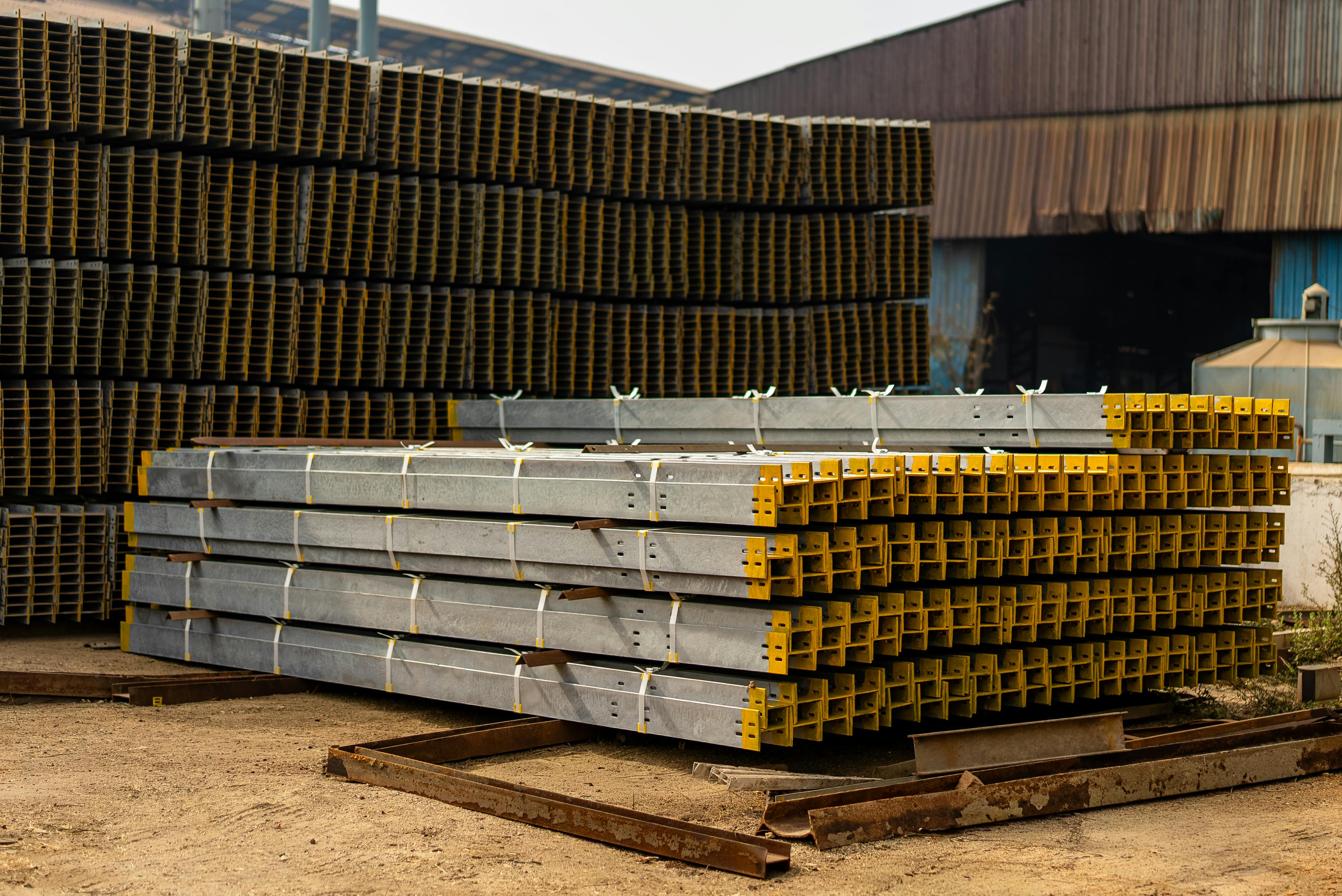
Bellona attended yesterday’s Ecodesign For Sustainable Products Regulation (ESPR) stakeholder consultation meeting where the JRC presented its draft performance classes and methodology for steel, the first intermediate product class to go through the ESPR process. What’s decided here sets the precedent for most products sold in the EU.
The ESPR framework will materially affect the EU’s industrial and climate policy, namely because the Industrial Accelerator Act (IAA) proposal directly references the upcoming ESPR Delegated Act on steel for setting definitions for what is considered “low-carbon steel”. Quotas for low-carbon steel production must only reward the best performing products, otherwise they become a subsidy for business-as-usual.
We understand the rationale for absolute Product Carbon Footprint (PCF) -based classes and product-specific scales. But the draft thresholds would produce a label with almost no differentiation power on the EU market.
The core problem is that the JRC calibrated Green Public Procurement thresholds so that Classes A+B capture 30% of global production volume. But on the EU market, virtually all production already qualifies. Most EU blast furnace plants land in Class B. All EU electric arc furnace production is in Class A. A public procurer applying Class B as the green bar would simply be buying conventional coal-based BF-BOF steel. This label would incentivise companies to abandon their decarbonisation projects and commitments.
Three issues confirmed at the meeting
The draft uses CBAM default values, which are penalty figures for non-reporters, as representative of actual import emissions. This inflates the distribution and makes the 30% threshold appear meaningful. The JRC acknowledged it needs to “rerun the exercise with real data.”
The 30% A+B target is a design choice, not a legal requirement under the ESPR. When asked why not allow an empty Class A – as the EU does with energy labels for appliances – the JRC said steel markets move slowly. But an empty “best performing” class is not a flaw, but rather the signal that drives innovation.
For example, before the 2021 EU Energy Label rescaling, technological success meant that most appliances were crowded into top classes. This made it impossible for consumers to distinguish between an average and a “top” product. A central principle of the new system was to ensure Class A was initially vacant. This was designed to signal future innovation, giving manufacturers a clear target to aim for.
The presentation showed that BF-BOF could move from Class C all the way to Class A through process optimisation. If conventionally optimised fossil-based steel can reach “best-in-class,” the label defeats its own purpose.
Steelmakers, iron producers and climate organisations challenged the approach. As we put it during the meeting: these thresholds appear less ambitious than existing labelling systems in India and China. For a bloc that claims to lead on industrial decarbonisation, that should be a warning sign.
What needs to change
→ Set Class A thresholds that genuinely reflect best-in-class decarbonisation performance, not levels that conventional production can already reach. The label must truly reward frontrunners and create a clear target for the sector.
→ Replace a normal distribution that rewards fossil-based producers with a methodology that allows for a near-empty Class A as a pull toward breakthrough steel, just as the EU does with energy labels.
→ Replace CBAM defaults with actual emissions data, and calibrate to the EU market rather than global production.
→ Include a binding tightening of thresholds at each review.
Steel is the test case. If the first ESPR label greenwashes the mainstream, it undermines the entire framework. Stay tuned for our recommendations.
«The proposed ESPR methodology could lead to a system that is less ambitious than other existing steel labelling approaches. That should be a serious warning sign. It is difficult to explain why the EU – which aims to lead on industrial decarbonisation – would end up with a label that is much more lenient than systems developed in jurisdictions with less advanced climate timelines. We need a robust framework that is consistent with the objective of rewarding frontrunners rather than accommodating the status quo.»
Dr. Lena Patterer
Specialist in Steel Transformation
«If conventional fossil steel qualifies as ‘high-performing’ under the ESPR, the EU risks sending exactly the wrong signal to the market. Public procurement and industrial policy would end up rewarding yesterday’s technologies, rather than accelerating the transition to near-zero steel and ensuring competitiveness in growing green markets. Europe cannot claim climate leadership while setting a bar that most of today’s production already meets.»
In light of the European Commission’s ongoing considerations to amend the ETS State Aid Guidelines, revising the rules for Indirec...

Wednesday, September 16, 2026 – Brussels, Belgium Recognising the existence of climate change impacts i...

Wednesday, September 9, 2026 – Brussels, Belgium Today, the European Commission proposed a new Public Procure...

Co-authored by: Amélie Laurent, Bellona Europa and Kenneth Möllersten, IVL Swedish Environmental Re...

By Enrico Cipelli Alves, Policy Advisor, Sustainable Markets & CCS Published in Revolve This year’s Strait of Hormuz disruption&...
Get our latest news