
Joint letter – ICC reform and expansion risks diverting ETS Revenues from real climate action
In light of the European Commission’s ongoing considerations to amend the ETS State Aid Guidelines, revising the rules for Indirec...
News
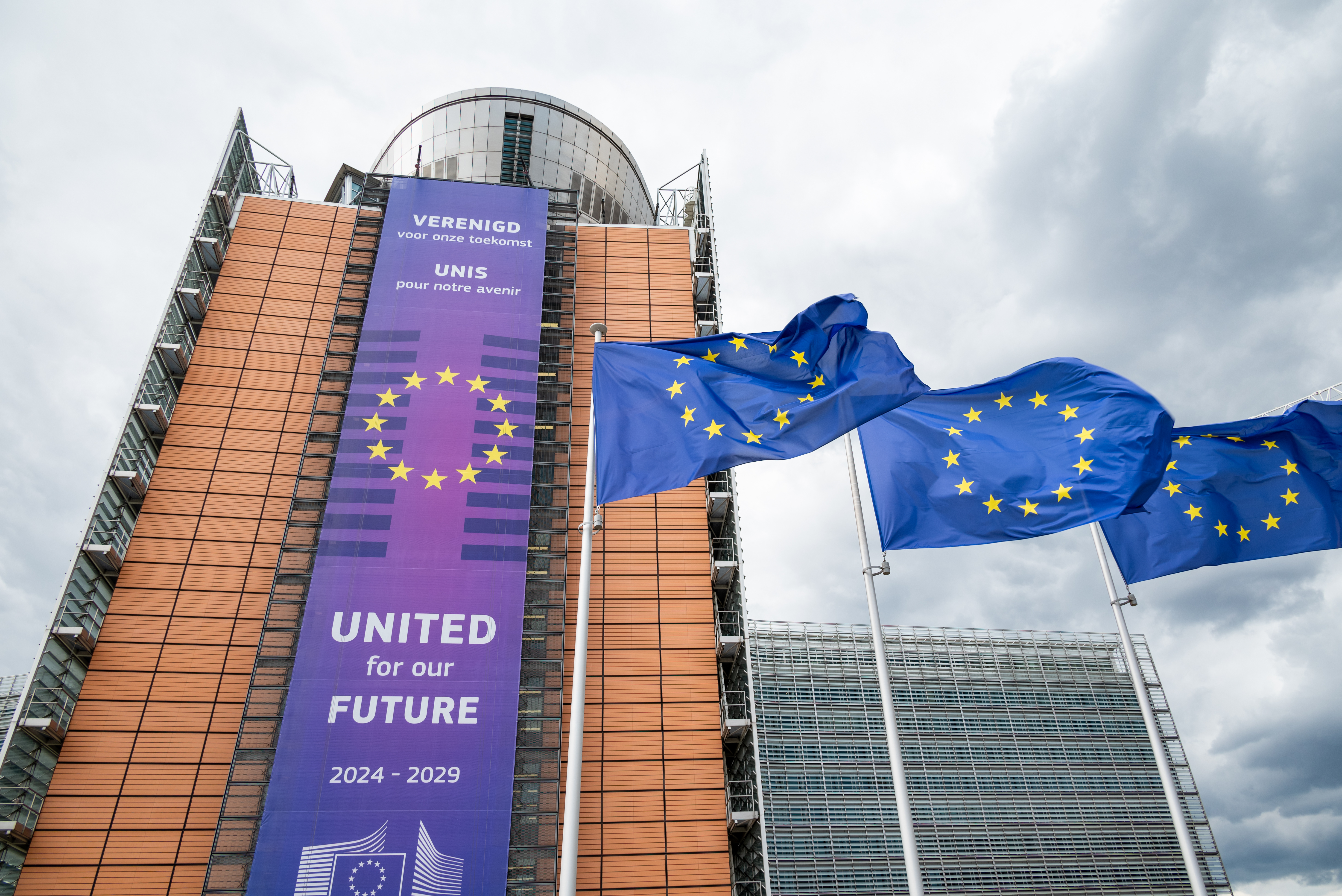
Publish date: September 16, 2026
News
Wednesday, September 16, 2026 – Brussels, Belgium
«The best European Heatwave Plan is one that prevents heatwaves in the first place. Staying the course should mean proposing a strong science-based climate framework to deliver 90% net emission reductions by 2040 within the EU.»

Amélie Laurent
Policy Advisor, Carbon Accounting
«Making the Arctic a flagship project for the EU and strengthening cooperation with Canada must mean continuing to work together on preventing new Arctic oil and gas extraction. Fossil fuel extraction in the Arctic would undermine the decarbonisation efforts and long-term climate strategy of the EU, the very tools that reduce our vulnerability on fossil fuels.»

Carl Emil Meier
Policy Advisor, Nordics
«Von der Leyen reaffirmed the commitment to the EU climate targets but said nothing about the carbon market overhaul that must deliver them. That silence isn’t an oversight; it’s sidelining one of the mechanisms Europe’s climate and industrial competitiveness depends on.»

Enrico Cipelli Alves
Policy Advisor, Sustainable Markets & CCS
Today, the President of the European Commission Ursula von der Leyen delivered her second State of the Union address of the 2024-2029 mandate. Climate and artificial intelligence were both presented as tipping points, placed broadly at the same level of importance. Treating them equally dilutes the urgency of climate action. It also raises questions about the Commission’s priorities. The reality is that technological competitiveness and climate action are intertwined – but one cannot come without the other. Worryingly, simplification was reaffirmed as a priority to reduce administrative burdens, with 12 ongoing omnibuses to simplify EU legislation – including key climate and environmental laws.
President von der Leyen highlighted the serious symptoms of the climate crisis (heatwaves, wildfires, droughts), but not the cause. Recent climate legislation proposed by the European Commission, such as the review of the Emission Trading System (ETS), risks putting the EU on the wrong track to climate neutrality.
The Arctic flagship joint project must mean continuing to work together on preventing new Arctic oil and gas extraction, as was already decided in the EU’s existing Arctic Strategy. Arctic oil and gas lead times are far too long to provide short term energy security, and they will be unnecessary in the long term. It would also mean severe and unique risks to the local environment in the Arctic, such as oil spills going under the ice. More Arctic oil and gas will do far more damage than it can ever do good.
President von der Leyen said, “let’s make Europe’s future electric”. Indeed, we call on the Commission to walk the talk and implement the necessary measures, both regulatory and financial, so that grids are deployed swiftly, and that efficiency, storage and flexibility are boosted to ensure that we can decarbonise our economy -including industry- through renewable electrification. To this end, binding targets in the post-2030 energy framework, and improved energy planning under the Grids Package will be crucial.
The speech offered little more than a restatement of the need to achieve the EU’s climate targets. Von der Leyen was largely silent on the investment needed to decarbonise industry at scale and on the enabling measures needed to create viable markets for decarbonisation technologies and support their deployment at scale to that end. The EU’s carbon market is the cornerstone for advancing electrification and creating the business case for industry investment, yet the ETS reform proposal risks prolonging inertia. Against a backdrop of record wildfires threatening the continent’s land sinks and an ETS that continues to add CO₂ to the atmosphere, the path to 90% risks being unattainable. Her address also overlooked EU forests, oceans, and other key biodiversity hotspots and carbon sinks.
One of the biggest points missing from the speech was the element of demand. While it emphasises the need for supply-side measures, it says nothing about the demand-side tools needed to create markets for low-carbon industrial products. This is a striking omission given that both the Industrial Accelerator Act and the Public Procurement Act are currently under discussion, and the significant potential these measures hold to accelerate decarbonisation, if designed effectively.
Context:
On Wednesday September 16, the President of the European Commission Ursula von der Leyen delivered the annual State of the Union address in front of the European Parliament in Strasbourg. This is always a key political moment looking back to all the main political developments of the past legislative year and laying out the upcoming legislative priorities of the European Commission. For the first time, a head of government was invited to the address, with the presence of the Prime Minister of Canada Mark Carney. This will be followed by the presentation of the work programme of the European Commission in October.
Contact:
Rebecka Larsson
Strategic Communications Manager
rebecka@bellonaeuropa.eu
In light of the European Commission’s ongoing considerations to amend the ETS State Aid Guidelines, revising the rules for Indirec...
Ahead of the October Environment and Energy Council meetings, the Coalition for Higher Ambition (HAC) is calling on EU Member States to support a rob...
Ahead of the European Commission’s post-2030 energy framework proposal expected by the end of the year, we, joined by more than 90 industry ass...

Wednesday, September 9, 2026 – Brussels, Belgium Today, the European Commission proposed a new Public Procure...

Co-authored by: Amélie Laurent, Bellona Europa and Kenneth Möllersten, IVL Swedish Environmental Re...
Get our latest news