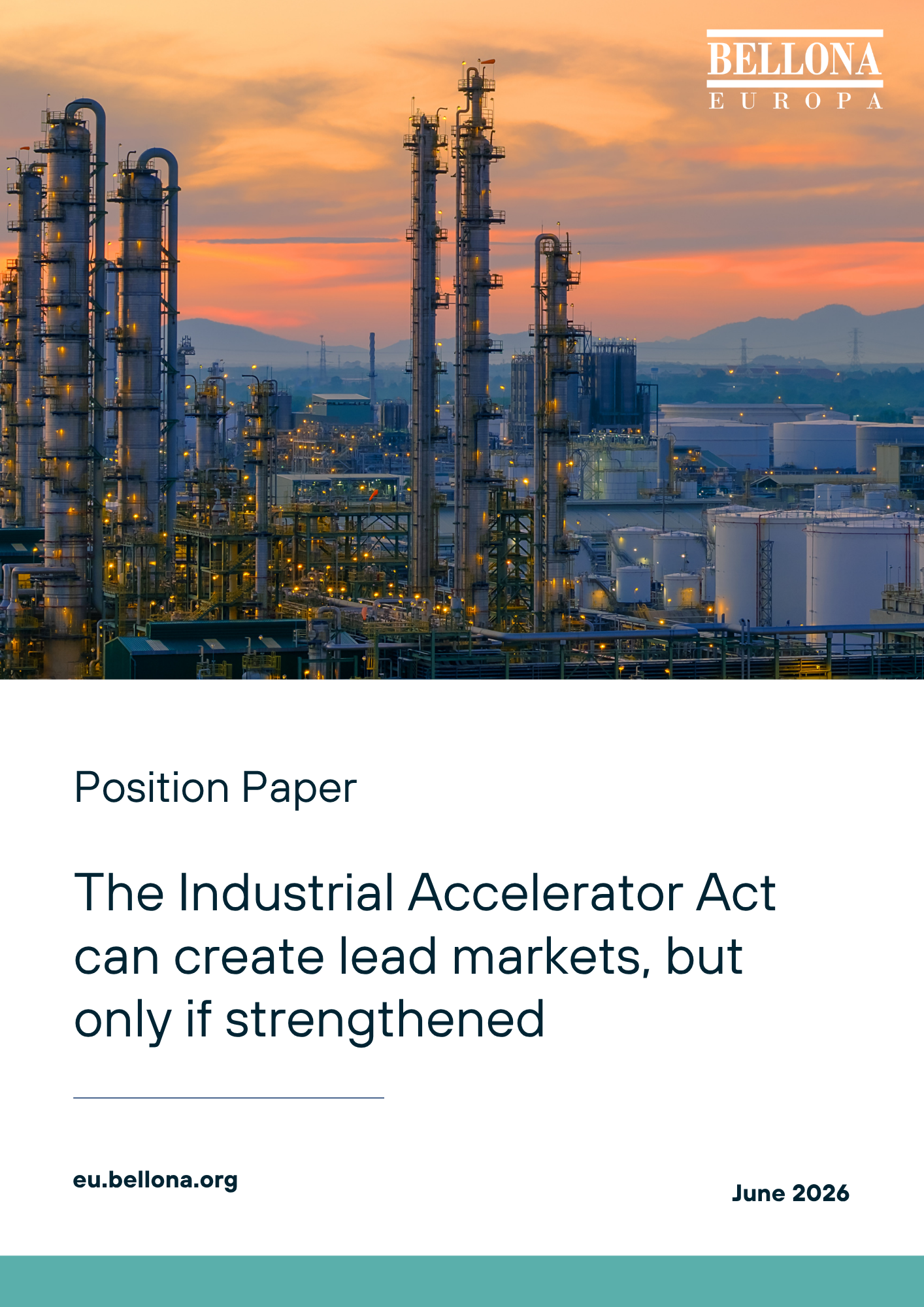
The Industrial Accelerator Act can create lead markets, but only if strengthened
The Industrial Accelerator Act (IAA) is a welcome and necessary step. But decarbonising Europe’s most emissions-intensive industries – steel, cem...
Publication

Publication
How to build for the future
The Omnibus I package is a proposal published by the European Commission on February 26, 2025, that aims to ‘simplify’ the EU Taxonomy (which sets out what business activities count as genuinely environmentally sustainable) – among other key EU sustainability regulations – by reducing the reported data entries for non-financial undertakings from 78 to 28, which is a 64% reduction.
The proposal received widespread criticism from civil society organisations working on environmental and climate change issues, including Bellona Europa, that raised the alarm over the actual deregulatory nature of the package, which would undermine the effectiveness of the Taxonomy as a tool to identify sustainable businesses.
As of December 2025, the review of the Taxonomy’s technical screening criteria is currently open for stakeholder feedback. In order to raise awareness about the importance of having reliable, science-based sustainability criteria in the EU Taxonomy, Bellona Europa developed this factsheet as an invitation to policy makers to raise the ambition of sustainability requirements rather than lowering it. This is done by highlighting the shortcomings of the EU taxonomy provisions on 3 key hard-to-abate construction materials: Steel, Aluminium and Cement; as well as on the very own construction and renovation processes, as compared to the ones developed by the Independent Science-Based Taxonomy (ISBT). The comparison also includes accessible explanations of the benefits that would result by implementing the ISBT’s criteria.
Further Bellona reading:
Sources:

Co-funded by the European Union
Views and opinions expressed are however those of the author(s) only and do not necessarily reflect those of the European Union or CINEA. Neither the European Union nor the granting authority can be held responsible for them.
Get our latest news