Press Release – The Commission Moves Away from Lowest Price, but What Counts as ‘Quality’?
Publish date: September 9, 2026
Shortcuts on this page
News
Press Release – The Commission Moves Away from Lowest Price, but What Counts as ‘Quality’?
Wednesday, September 9, 2026 – Brussels, Belgium
Today, the European Commission proposed a new Public Procurement Regulation, replacing three existing directives with a single, directly applicable rulebook. Public procurement accounts for nearly 15% of EU GDP, and the proposal moves away from lowest price as the default award criterion, making quality criteria at least 30% of every tendering decision.
Bellona Europa welcomes this shift, but warns that without a firmer mandate to implement environmental and innovation requirements , the proposal risks falling short of its own ambition.
We have three main asks:
Strengthen the role of green, innovation, and social quality criteria. As currently drafted, quality criteria remain too loosely defined to drive greater uptake of Green or Innovative Public Procurement. We call on the Council and Parliament to close this gap by mandating environmental, innovation, or social requirements for goods and services where public procurement represents a significant share of the market.
Make quality criteria mutually reinforcing. European preference, security, environmental, innovation, and social requirements should not be treated as competing criteria but as complementary ones. We recommend that co-legislators enshrine this principle in the final act, ensuring these criteria apply alongside one another rather than in isolation.
Safeguard ambitious Green Public Procurement. There is a real risk that the current provisions will water down ambitious green public procurement rules already in place in national legislation and at the sectoral level. We call on the Council and Parliament to ensure the final text maintains ambitious sectoral provisions and sets a common floor for Member States without capping what they can do.
«This proposal contains many good elements, but it leaves almost everything optional. ‘Quality’ can mean virtually anything, and public buyers could favour local content alone while forgoing environmental, social, or innovation requirements altogether. I struggle to see how this will serve EU competitiveness, the green transition, or stimulate innovation. »
Linda Zarai
Policy Advisor, Clean Construction
«Public buyers are uniquely positioned to create the lead markets Europe’s low-carbon producers need. Optional use of environmental criteria is not going to cut it: voluntary approaches have already been tried under the current framework, and they have failed to deliver scale. If the Act is serious about turning procurement into a strategic tool, it must include mandatory minimum environmental requirements that go at least as far as current sectoral legislation. »
Irene Domínguez Pérez
Policy Manager, Embodied Carbon & Lead Markets
From three directives to one Public Procurement Regulation
The Commission is repealing three of the four Directives on public procurement and merging them into one Regulation. This signals that the European Commission seeks to achieve the highest level of harmonisation by limiting Member States’ gold-plating.
Bellona Europa welcomes this development, as moving towards integrated and clear rules for Green and Innovation-driven public procurement is essential to support the creation of lead markets for low-carbon products and technologies
As we shift away from the lowest price, we move towards a (too) broad definition of quality criteria
The Public Procurement Regulation proposal now makes the Best-Price-Quality-Ratio (BPQR) the default awarding mechanism. Quality criteria now must make up at least 30% of the weight in procurement decisions, whether through award criteria, comparable specifications, or performance clauses. The move away from the lowest price is a common ask of a wide range of stakeholders, including NGOs, trade unions, industry, and academia.
Yet, the proposal suggests a broad range of quality criteria that may be used, such as environmental, social, European preference, security, and innovation requirements. Furthermore, the proposal allows for each criterion to be applied in isolation from the others, and virtually none of these quality criteria is mandatory. For example, a bid might be awarded solely on the grounds of European preference, irrespective of its social, environmental, or innovation impact. We fear that public procurement rules designed this way may hinder industrial decarbonisation and green innovation.
Bellona Europa is pleased to see the ask of EU stakeholders consolidated in the European Commission proposal.However this is not enough. We call on co-legislators to ensure that environmental, innovation, and social quality criteria act as cornerstones of Europe’s public procurement, and that local content criteria are used to support the establishment of Europe’s green industry.
This means that Green Public Procurement is still not mandatory
The Commission’s proposal dedicates a whole chapter to Green Public Procurement, well specifying what it is and what it covers. However, procuring green remains optional. This means that, yes, contracting authorities may use environmental requirements, but they will not have to. This essentially contradicts Article 5, which states that climate and environmental protection are among the Union’s strategic goals that must be pursued through public procurement. Bellona Europa calls on co-legislators to address this pitfall and to ensure that European public spending promotes GHG reduction and industrial decarbonisation by requiring a portion of awards to be allocated to Green Public Procurement.
National Green Public Procurement provisions might have to go
Bellona Europa warns of the risks of limiting Member States’ right to go beyond the proposal’s provision. As it reads, the proposal sets a ceiling on Member States’ ambition, by making green public procurement optional for public buyers also in countries like Italy, France, or Spain that currently have mandatory environmental conditionalities, more ambitious than those set in the current proposal. If the proposal were adopted as it is, this would mean several steps backwards for Green Public Procurement in the EU.
We encourage the co-legislators to keep this in mind throughout negotiations, safeguarding the capacity of Member States to exceed the Union’s requirements without falling short of them.
Repeals in sectoral legislation could weaken Green Public Procurement further
Through this proposal, the European Commission seeks to repeal or amend Green Public Procurement provisions contained in fourteen sectoral pieces of legislation, including the Construction Product Regulation, the Net-Zero Industry Act, and the Ecodesign for Sustainable Products Regulation.
Bellona Europa recognises the importance of easing administrative burden for contracting authorities. However, this proposal reopens debates on accomplishments in sectoral legislation, which are more comprehensive than what is currently proposed. There is a real risk that this reopening could further weaken environmental conditionalities.
Procurement for innovation is a game changer for green industrial innovation
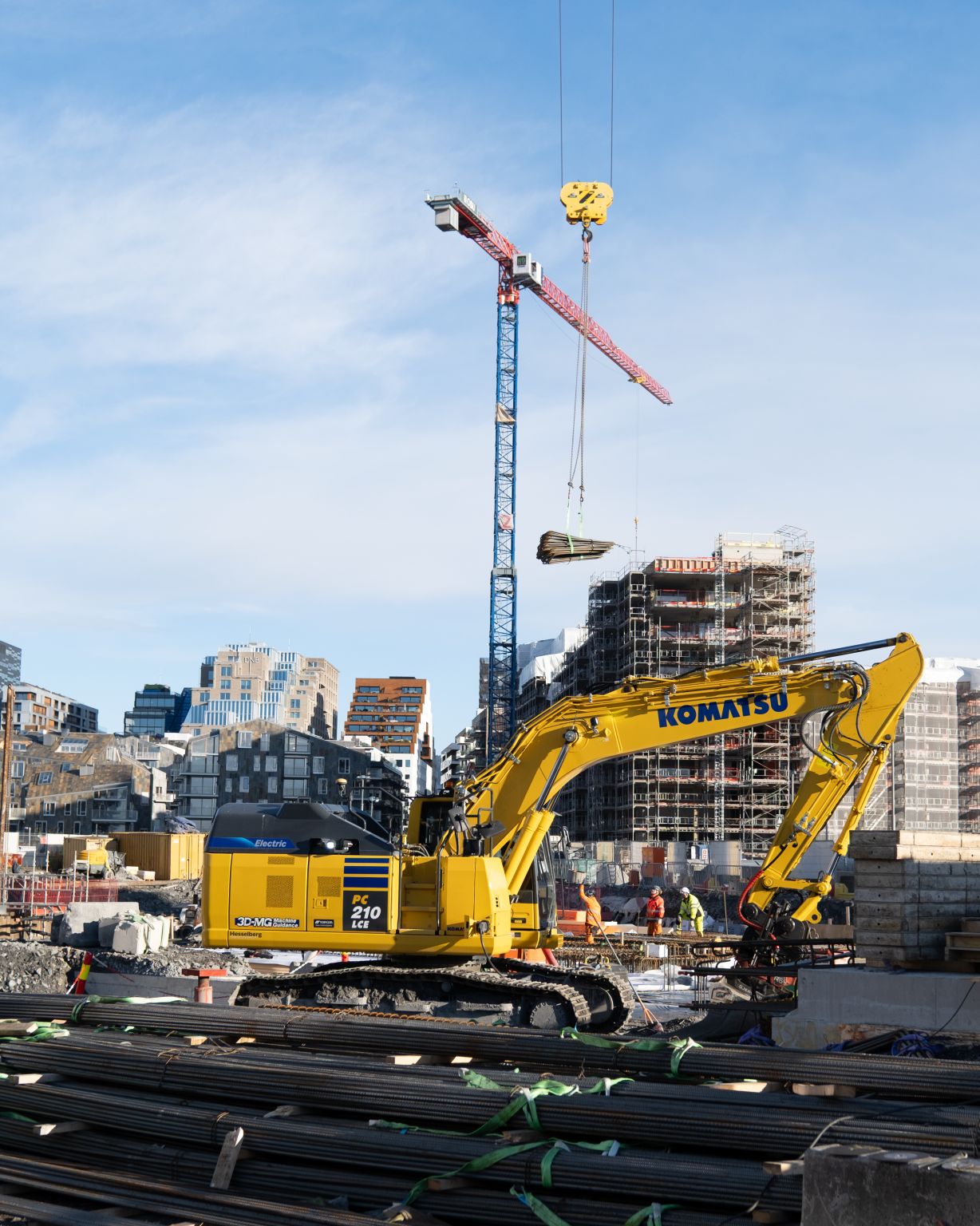
In the construction industry, low-carbon cement and zero-emission construction equipment provide real examples of how procurement for innovation and the innovation procedure can facilitate the lead market creation of currently niche green technologies and products. If this article survives the final text, contracting authorities will now be allowed to procure emerging or niche technologies, effectively supporting lead market creation and tapping the transformational capacity of public procurement.
Bellona Europa strongly welcomes this new chapter of the regulation. However, we recommend that co-legislators include a quantified market-adoption reference for technologies already on the market, but that have not reached the scale needed to enable a clean market transition.
Context
Public procurement accounts for nearly 15% of the EU GDP. In 2023, the European Court of Auditors’ report highlighted that the existing Public Procurement Framework led to reduced competition in public tenders. Following this report, the Council of the EU and the European Parliament called on the European Commission to design a Procurement Strategy to promote competition, innovation, and the EU’s green and digital transition.