
Joint letter – ICC reform and expansion risks diverting ETS Revenues from real climate action
In light of the European Commission’s ongoing considerations to amend the ETS State Aid Guidelines, revising the rules for Indirec...
News
Publish date: October 22, 2026
News
By Linda Zarai, Policy Advisor, Clean Construction
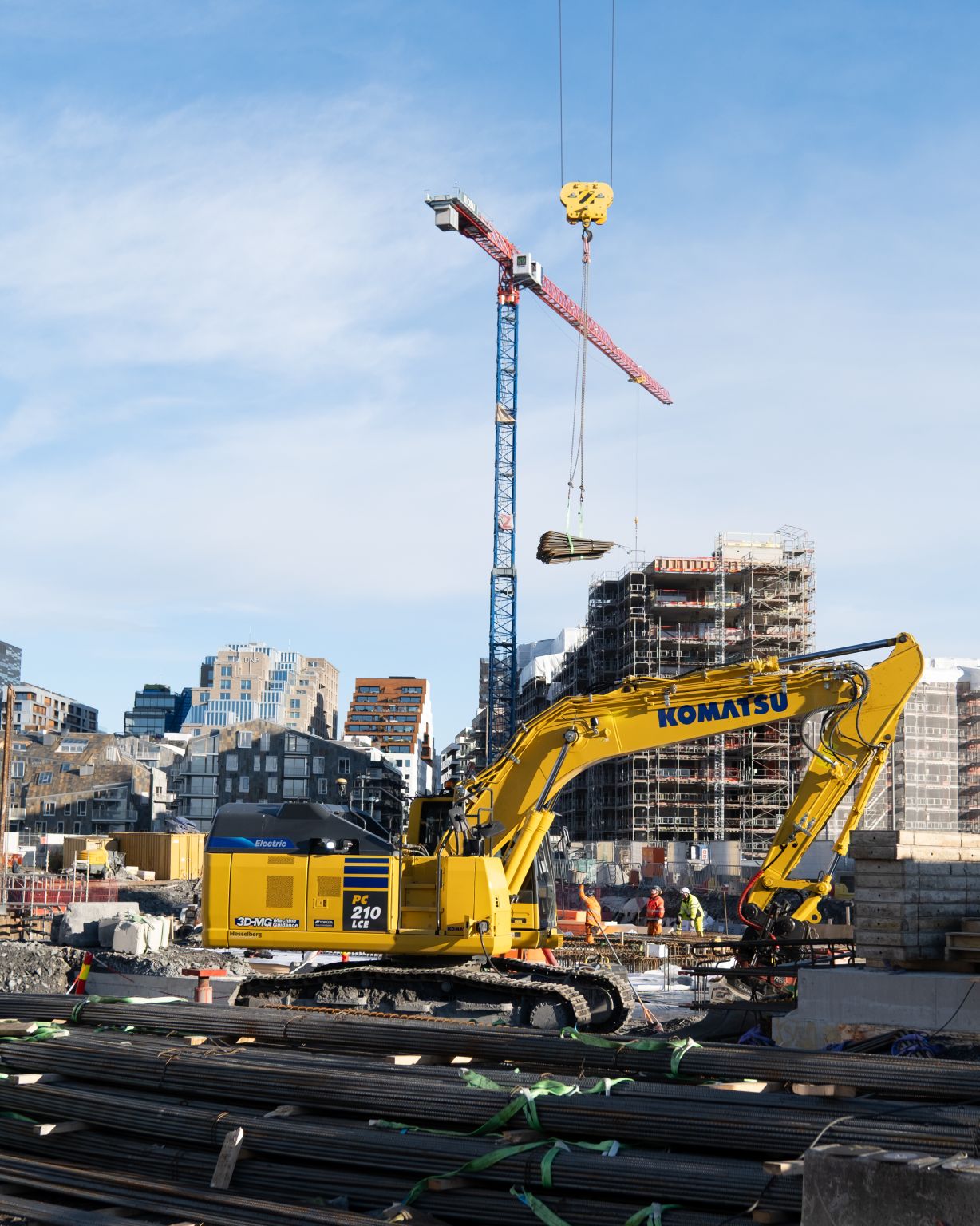
On September 23, Oslo City Council adopted a local resolution that extends the zero-emission construction site (ZECS) requirements – previously applied only to the City Council’s own projects – to private construction sites. Oslo is the first Norwegian municipality to take this step and, alongside Utrecht in the Netherlands, one of the pioneering European cities set to establish zero-emission requirements for private construction sites.
The new rule will come into force in July 2027. The requirements will take effect the following year, giving construction industry operators time to prepare.
Starting July 2028, at least 30% of the energy used on each construction site must come from zero-emission solutions or biogas. This threshold will rise to 60% in July 2030 and to 75% in July 2032. The regulation applies to buildings with a gross floor area of more than 500 m² and civil engineering works involving the movement of more than 500 m³ of material. The regulation foresees possible exemptions whenever the use of zero-emission machinery would entail disproportionate costs or where compliance is not technically feasible.
Setting a minimum quota for zero-emission energy per construction site has key benefits. Every construction site subject to the regulation must have the infrastructure in place to supply zero-emission energy, such as a grid connection and charging points. Once this infrastructure is in place, contractors can use more zero-emission machinery and equipment than the minimum required, wherever this reduces operating costs. Further, clients and contractors must record total on-site energy consumption, broken down by energy source and expressed in kWh. The documentation must be available on site and provided to the local authority on request, which facilitates the monitoring and enforcement of the regulation.
Since 2017, Oslo has required all municipal construction projects to operate without fossil fuels, with biofuels serving as a transitional solution. Since 2019, the municipality’s public procurement requirements have rewarded companies able to offer zero-emission solutions. From 1 January 2025, ZECS became a minimum requirement for all publicly procured construction works. The municipality set this course when few zero-emission construction machines were available on the market. Since then, the municipality has carried out 200 projects using zero-emission machines. Oslo’s consistent demand and clear path-setting, established through early and continuous exchanges with industry, have given manufacturers and businesses a predictable market for zero-emission machines, helping develop a much-needed market that did not exist just ten years ago.
Oslo is no longer alone, as more European cities are setting mandates for ZECS to meet their climate and air quality plans. Starting in 2028, Utrecht too will apply minimum zero-emission requirements for construction machinery to anyone applying for a permit for construction or demolition work. Barcelona, Eindhoven, Amsterdam, Copenhagen, Stockholm, and Gothenburg also include minimum public procurement requirements and electrification targets, while more cities, including Vienna, Zurich, Nuremberg, and Hamburg, have piloted zero-emission construction sites in municipal projects.
In light of the European Commission’s ongoing considerations to amend the ETS State Aid Guidelines, revising the rules for Indirec...

Wednesday, October 21, 2026 – Brussels, Belgium The European Union has published its new Arctic Strategy, and it is good news for the climate. One...

By Carl Emil Meier, Policy Advisor, Nordics Denmark is widely recognised as a pioneer in wind energy, which remains one of Europe’s key drivers of...

Ahead of the October Environment and Energy Council meetings, the Coalition for Higher Ambition (HAC) is calling on EU Member States to support a rob...
Ahead of the European Commission’s post-2030 energy framework proposal expected by the end of the year, we, joined by more than 90 industry ass...
Get our latest news