
ZECS Fact Sheets: How cities’ green procurement creates lead markets
Zero-Emission Construction Sites (ZECS) are worksites where only zero-emission construction machinery and transport operate. The construction stage i...
News
Publish date: November 12, 2026
News
ExxonMobil’s claim over Article 23 of the Net Zero Industry Act raises wider concerns about the use of investment arbitration against climate measures
Brussels, 12 November 2026 | A leaked document has revealed that ExxonMobil has formally initiated an investor-state dispute settlement (ISDS) case against the European Union over Article 23(1) of the Net-Zero Industry Act (NZIA) which obliges major EU oil and gas producers to deploy 50Mt of annual CO2 injection capacity by 2030, putting at risk the Union’s efforts to scale CO₂ storage infrastructure, accelerate industrial decarbonisation, and achieve its climate and clean technology deployment goals. The claim has been brought under the Energy Charter Treaty (ECT) by three companies within the ExxonMobil group, including an entity registered in the United Kingdom.
According to the document, Exxon has announced that it will ask the tribunal for an interim measure that would “seek the suspension of Article 23 of the NZIA[1] in respect of their affected subsidiaries”, effectively trying to get out of its climate obligations before the tribunal has reached a decision on the case.
ExxonMobil has long publicly promoted CCS as an important part of the energy transition. Its challenge concerns an EU measure designed specifically to accelerate the availability of CO2 storage infrastructure on which the decarbonisation of European heavy industries depend. The implications of this arbitration extend well beyond carbon management. At a time when the EU is seeking to mobilise private-sector investment in the strategic infrastructure needed to underpin Europe’s transition to a clean, competitive economy, the case highlights how legacy investment protections could stand in the way of these efforts.
The ECT’s sunset clause raises a particularly important concern: even after withdrawing from the Treaty, could the EU’s efforts to bring private companies on board in building the foundations of a clean economy be held hostage to an investment protection framework designed for a very different energy landscape?
” The wider issue raised by this case is significant. Meeting the EU’s climate-neutrality objectives means accelerating investments in infrastructure that will ultimately underpin a clean economy and create long-term commercial opportunities for the companies developing and operating it. Article 23 has an important role to play in ensuring these investments happen at the pace required to meet our climate goals. Investment arbitration should not become a mechanism through which companies seek compensation for being required to accelerate investments that will eventually form part of their own business models.” – William Druet, Policy Advisor, CCS, Bellona Europa (part of the Aritcle23Watch project)
The ExxonMobil case against the EU is one among many ISDS cases that directly challenge Europe’s climate agenda. Collectively they represent a serious barrier to a faster and fairer transition. Other ongoing cases against European countries include:
Beyond Article 23, large compensation claims – or the prospect of them – can divert governments from considering climate and industrial policies that require private companies to take on direct responsibilities for delivering strategic infrastructure and decarbonisation objectives.
“Exxon’s case attempt to evade its climate obligations is outrageous. But unfortunately, it is far from the only attempt to use corporate tribunals against much-needed climate policies. If European governments are serious about accelerating the energy transition, they need to cancel the treaties that give fossil fuel companies access to these one-sided tribunals.”- Fabian Flues, Investment Policy Lead at PowerShift
The case also highlights the detrimental effect of the Energy Charter Treaty’s 20-year sunset clause.
Both the European Union and the United Kingdom have withdrawn from the ECT after concluding that the treaty was no longer compatible with their climate and energy-policy objectives. Nevertheless, existing investments at the time of the withdrawal continue to benefit from treaty protection for another 20 years.
ExxonMobil’s inclusion of a UK-incorporated company in the claim is particularly significant given the legal restrictions surrounding intra-EU investment arbitration.
The dispute therefore comes at an important moment for EU–UK relations. Leaders will meet in Brussels on 20 November for the second EU–UK summit, where energy and climate cooperation are among the issues due to be discussed. Civil-society organisations are calling on both sides to agree to neutralize the ECT’s sunset clause through an inter-se agreement (6), so that an outdated investment protection framework can no longer limit the Union’s and the UK’s climate ambitions.
“At their summit on 20 November, EU and UK leaders should commit to disapply the sunset clause between them, which would prevent further claims of this kind.” – Lukas Schaugg, Policy Advisor at the International Institute for Sustainable Development
Notes
(1) Article 23 addresses a critical bottleneck in industrial decarbonisation: the lack of available CO₂ injectioncapacity, essential for deploying carbon capture and storage (CCS) at the scale needed for the deep decarbonisation of strategically important European industries, such as cement and steel.
(4) https://tjm.org.uk/our-work/corporate-courts/sued-over-stopping-a-new-coal-mine/
(5) https://bilaterals.org/icsid-registers-lansdowne-oil-gas
(6) https://www.iisd.org/publications/brief/energy-charter-treaty-survival-clause
[1] Article 23 addresses a critical bottleneck in industrial decarbonisation: the lack of available CO₂ injection capacity, essential for deploying carbon capture and storage (CCS) at the scale needed for the deep decarbonisation of strategically important European industries, such as cement and steel.
Zero-Emission Construction Sites (ZECS) are worksites where only zero-emission construction machinery and transport operate. The construction stage i...
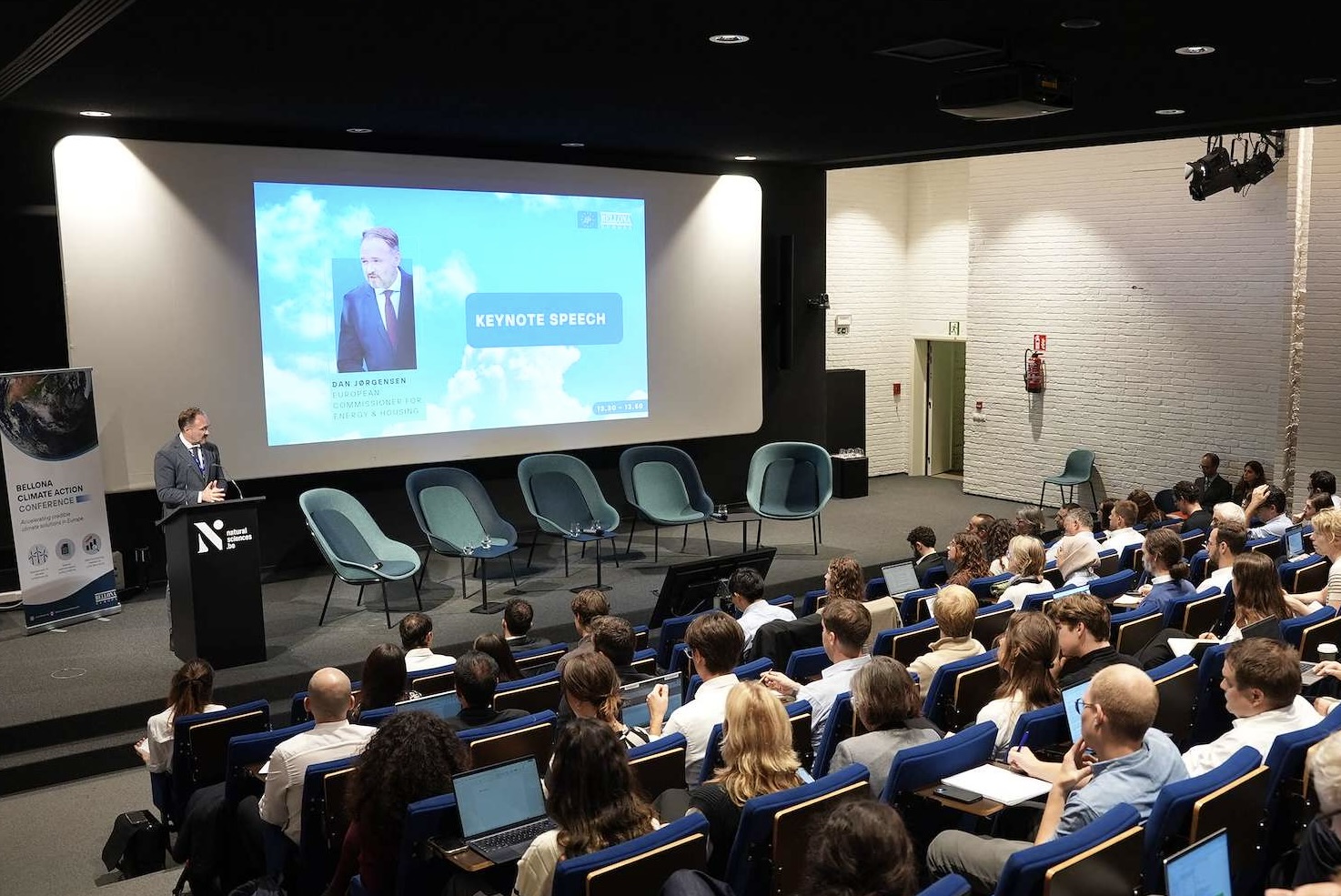
The third edition of the Bellona Europa Climate Action Conference took place on 1 October 2026, bringing together policymakers, industry representati...
Ahead of Thursday’s meeting of energy ministers, we and 16 other organisations from the EU Innovation Hub joined forces to call for ambitious renewab...
This year, the European Commission has committed €3.4 billion in grants from the Innovation Fund. Financed through revenues from the EU’s Emission Tr...
Get our latest news